The phrase collision meaning in chat often confuses people because it looks like a technical or literal word, yet it occasionally appears in texting, gaming chats, and social media conversations.
In digital communication, words can shift meaning depending on context, tone, and platform culture.
This guide explains what “collision” means in chat, whether it is slang, how Gen Z uses it (if at all), and how it fits into texting, memes, and online expression in 2026.
You’ll also see real chat examples, comparisons, FAQs, and clear explanations so you can confidently understand this term in modern digital conversations.
What Does Collision Meaning in Chat Mean?
In chat or texting slang, “collision” usually keeps its literal meaning, referring to a crash, impact, or two things hitting each other. It is not a widely established Gen Z slang term. However, in online contexts, it can be used metaphorically to describe situations where ideas, people, emotions, or digital actions “clash” or overlap unexpectedly.
In most cases, “collision meaning in chat” refers to misunderstanding the word “collision” when seen in messages rather than it being slang itself.
Literal Meaning of Collision
The word collision comes from physics and general English vocabulary. It means:
- A violent impact between two or more objects
- A crash caused by movement in opposite or intersecting directions
- In technical terms, interaction or contact that produces force or disruption
Origin-wise, “collision” comes from Latin collisio, meaning “a striking together.” It is commonly used in science, traffic reports, gaming mechanics, and engineering contexts.
In short, the literal meaning is always physical or structural impact—not slang-based by default.
How Is Collision Used as Slang Online?
While collision is not mainstream internet slang, it sometimes appears in a figurative or humorous way across digital communication platforms.
In Gen Z texting culture, words are often repurposed for emotional or dramatic effect. So “collision” may be used to describe:
- Emotional clashes (“our personalities collided”)
- Awkward social encounters (“that convo was a collision lol”)
- Gaming or meme moments (“we had a full team collision 😭”)
- Dramatic storytelling in chats or Discord messages
On platforms like TikTok, Discord, and X (Twitter-style posts), “collision” may be used ironically to exaggerate conflict or chaos. It becomes a figurative meaning rather than literal physics.
This reflects broader trends in texting slang, social media expression, and emotional slang, where ordinary words gain playful or dramatic interpretations.
Is Collision Commonly Used in Texting?
No, collision is not a commonly used texting slang word.
It is:
- Rare in everyday messaging
- More common in gaming or technical discussions
- Occasionally used humorously in memes or storytelling
Most people use alternatives like:
- “clash”
- “chaos”
- “mess”
- “drama”
- “crash”
So if you see “collision” in chat, it is usually either literal or stylistic rather than part of mainstream Gen Z slang.
Examples of Collision in Text Messages
Here are realistic examples of how “collision” might appear in modern chats:
Example 1 (literal gaming context):
A: “We lost the race 😭”
B: “Yeah, total collision at the final turn”
Example 2 (emotional metaphor):
A: “How did your group project go?”
B: “Honestly, it was a collision of ideas”
Example 3 (humorous Gen Z tone):
A: “How was the party?”
B: “Bro it was a social collision 💀”
Example 4 (Discord chat):
User1: “We all spoke at once”
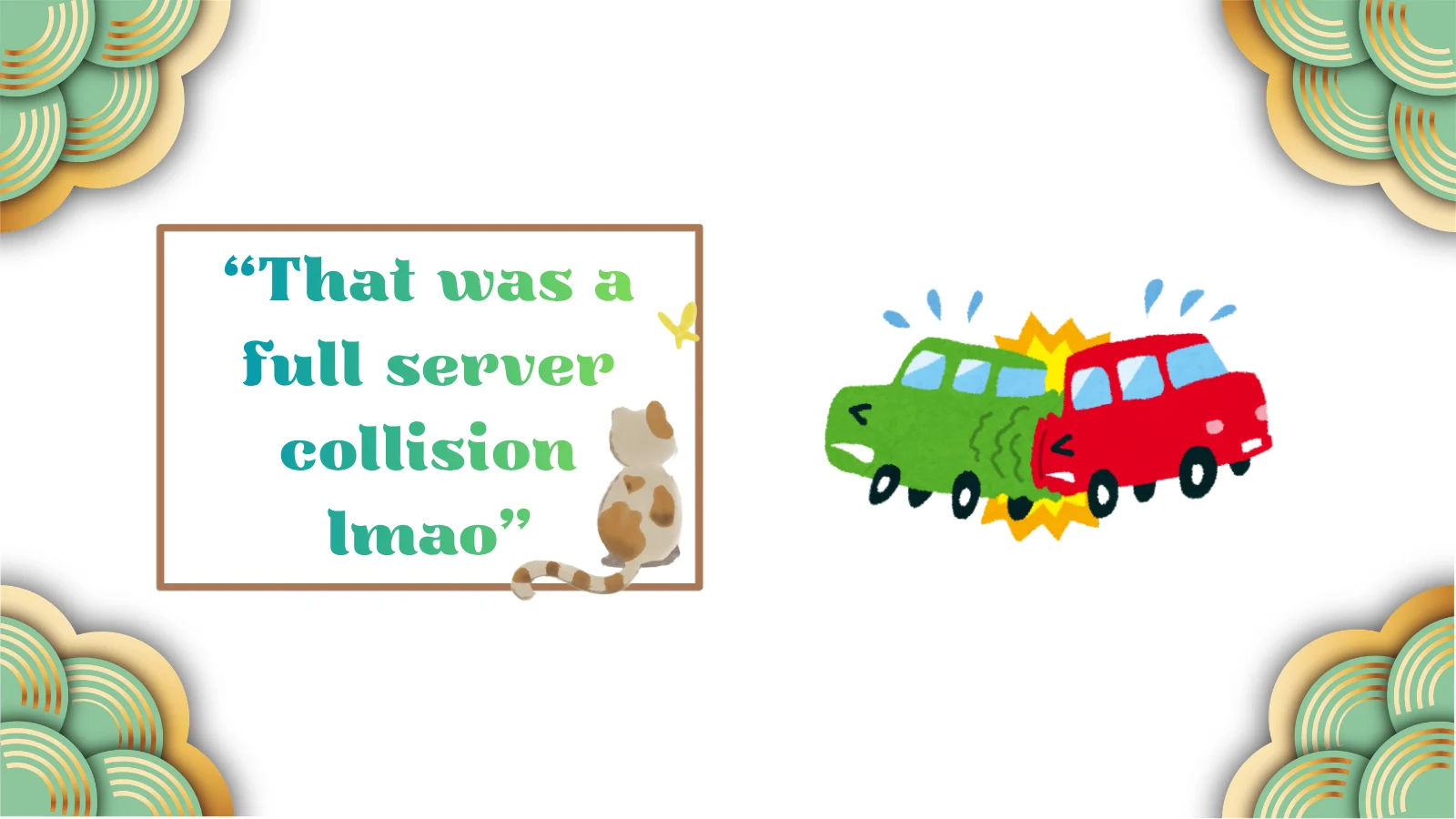
User2: “That was a full server collision lmao”
Example 5 (TikTok caption style):
“when two personalities collide = emotional collision fr”
Example 6 (awkward interaction):
A: “Did you talk to them?”
B: “Yeah… it was a collision. I regret it.”
Example 7 (friend group chaos):
A: “What happened in the group chat?”
B: “Collision of opinions. Nobody agreed.”
These examples show that when used, the word is more expressive, dramatic, or humorous than literal.
Similar Slang Words or Expressions
Words or phrases similar in vibe or usage include:
- Clash – stronger association with conflict or disagreement
- Chaos – informal expression for messy situations
- Crash – often used in tech or emotional overload contexts
- Drama – social conflict or emotional tension
- Explosion – exaggerated emotional or situational intensity
- Overload – too much happening at once
These terms are far more common in internet slang and Gen Z communication than “collision.”
Collision vs Similar Terms (Comparison Section)
Collision vs Clash
- Collision: physical or metaphorical impact
- Clash: usually disagreement or conflict between people or ideas
Collision vs Chaos
- Collision: moment of impact
- Chaos: ongoing disorder or confusion
Collision vs Crash
- Collision: interaction or impact
- Crash: sudden failure or breakdown (tech, emotional, or physical)
Is It Formal or Informal?
The word collision is primarily formal or neutral, depending on context.
- Casual texting: Rare, but used jokingly
- Social media: Occasionally used for humor or exaggeration
- Academic use: Common in physics, engineering, and science
- Professional use: Standard term in transportation, safety, and tech
It is not considered slang-heavy, so it remains more neutral than expressive internet vocabulary.
Frequently Asked Questions (FAQ)
1. Is collision Gen Z slang?
No, “collision” is not Gen Z slang. It is a standard English word mostly used in literal or technical contexts. However, Gen Z may occasionally use it metaphorically for humor or exaggeration in chats or memes.
2. What does collision mean in texting?
In texting, “collision” usually refers to a crash, clash, or situation where things (ideas, people, or events) interact in a chaotic or impactful way. It is not a formal slang term but can be used creatively.
3. Is collision trending on TikTok?
Not specifically. While the word may appear in captions or humorous edits, it is not a trending slang keyword on TikTok. It is more of a contextual word rather than a viral expression.
4. Can collision refer to people?
Yes, but only metaphorically. People might say “their personalities collided,” meaning they clashed or interacted strongly. It is not literal and is used for dramatic storytelling.
5. Is collision sarcastic or serious?
It can be both depending on context. In technical use, it is serious. In chats or memes, it can be sarcastic or humorous, especially when describing awkward or chaotic situations.
6. Is collision commonly used in texting?
No, it is not commonly used in everyday texting. Most users prefer simpler slang like “chaos,” “drama,” or “clash” instead.
7. What is the internet meaning of collision?
On the internet, “collision” keeps its original meaning but is sometimes used metaphorically to describe emotional or social impact between people, ideas, or events.
Quick Summary
- Collision meaning in chat: Usually literal, meaning crash or impact
- Slang usage: Rare, mostly metaphorical or humorous
- Popularity: Not common in Gen Z texting culture
- Context: Gaming, technical discussions, or dramatic storytelling
- Meaning type: Mostly literal, sometimes figurative
One-sentence definition:
“Collision in chat generally means a crash or impact, sometimes used figuratively to describe chaotic or clashing interactions.”
Final Thoughts
The term “collision” is not a mainstream slang word in digital communication, but it still appears occasionally in chats, gaming conversations, and social media posts.
Its meaning stays mostly literal, referring to impact or crash, though Gen Z users may use it creatively to describe chaotic or emotionally intense situations.
Unlike trending slang terms, it hasn’t evolved into a widely recognized internet expression.
Understanding its context is key because in most cases, it simply means two things coming together with force or disruption.
Leave a Reply