If you’ve recently seen baby cry in a text message, TikTok comment, Discord chat, or social media post, you may be wondering about the baby cry meaning in chat.
While the phrase can literally refer to an infant crying, online it often carries a more emotional, humorous, or exaggerated meaning.
In modern digital communication, internet users frequently use expressions like “baby cry” to describe vulnerability, sadness, disappointment, or even playful overreactions.
This guide explains what baby cry means in texting, slang, social media, and online conversations.
What Does Baby Cry Mean in Chat?
In chat and texting slang, baby cry usually refers to someone expressing sadness, disappointment, emotional vulnerability, or exaggerated distress. It is often used as an internet slang expression rather than a literal description of a baby crying. Depending on the context, it can be sincere, humorous, dramatic, or sarcastic.
Literal Meaning of Baby Cry
Literally, baby cry refers to the sound or act of an infant crying to communicate needs such as hunger, discomfort, tiredness, or attention.
The phrase comes directly from everyday language and has no unusual dictionary meaning. However, internet culture has expanded its use into emotional and figurative contexts.
How Is Baby Cry Used as Slang Online?
Online, baby cry is commonly used as a figurative expression rather than a literal one.
In texting slang and social media conversations, it often describes:
- Feeling emotional
- Being disappointed
- Reacting dramatically to bad news
- Expressing vulnerability
- Playfully acting upset
Gen Z users frequently use emotional slang in exaggerated ways. On platforms like TikTok, Discord, X, Instagram, and Snapchat, “baby cry” can appear in memes, reaction comments, and humorous conversations.
For example, someone might say:
“My favorite show got canceled. Baby cry.”
The speaker is not literally crying like a baby. Instead, they’re emphasizing sadness in a playful, internet-friendly way.
The tone can vary:
- Humorous
- Dramatic
- Sarcastic
- Self-deprecating
- Emotionally genuine
This flexibility makes it a useful social media expression in digital communication.
Is Baby Cry Commonly Used in Texting?
Yes, but not as a formal or universally established slang term.
The phrase is more common in:
- TikTok comments
- Meme communities
- Discord servers
- Casual texting
- Online fandom spaces
It is generally considered a niche emotional expression rather than mainstream texting shorthand like LOL, BRB, or IMO.
Its popularity often depends on trends, memes, and community-specific language.
Examples of Baby Cry in Text Messages
Example 1
Friend 1: They sold out of the concert tickets.
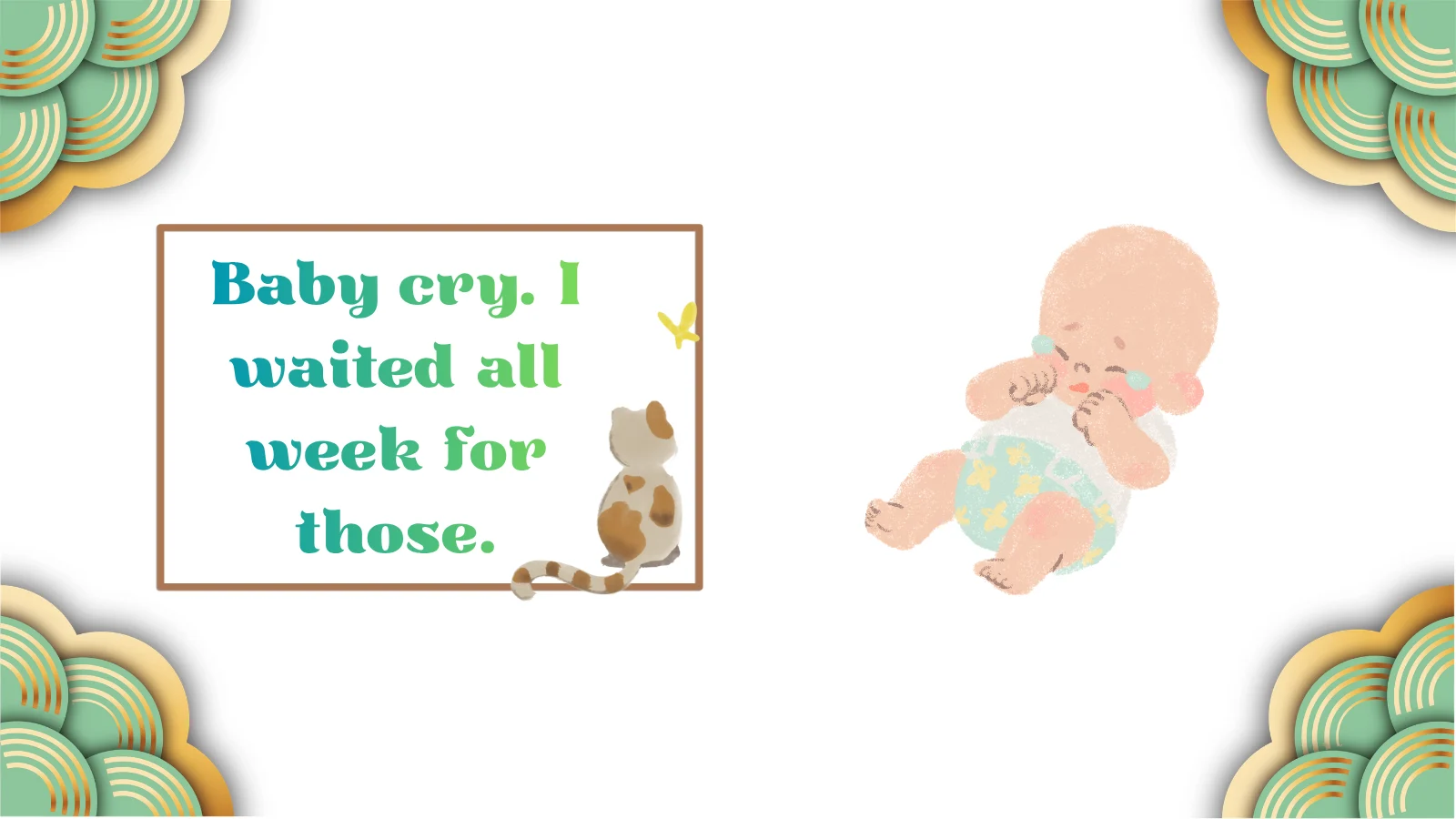
Friend 2: Baby cry. I waited all week for those.
Example 2
Alex: The update deleted my progress.
Jordan: Baby cry moment.
Example 3
Friend 1: My package got delayed again.
Friend 2: Baby cry 😭
Example 4
Taylor: School starts tomorrow.
Chris: Baby cry. Summer went too fast.
Example 5
Friend 1: My favorite creator is taking a break.
Friend 2: Baby cry energy.
Example 6
Caption: When the restaurant forgets your fries. #babycry
Example 7
TikTok Comment: Not the cliffhanger ending… baby cry.
Example 8
Discord Message: Everyone’s online except my best friend. Baby cry.
Similar Slang Words or Expressions
Several internet slang terms share a similar emotional tone with baby cry.
Crying Emoji (😭)
Used to show sadness, frustration, or overwhelming emotions.
I’m Dead
Often means something is extremely funny or emotionally overwhelming.
Sobbing
A popular Gen Z expression used to exaggerate emotional reactions.
Crying Screaming Throwing Up
A meme phrase used for extreme excitement, shock, or emotional overwhelm.
Soft
Used to describe feeling emotionally vulnerable or affectionate.
Emotional Damage
A humorous meme expression for disappointment or embarrassment.
Sadge
A Twitch and gaming-community slang term expressing sadness or disappointment.
Baby Cry vs Similar Terms (Comparison Section)
Baby Cry vs Crying Emoji
A crying emoji visually expresses emotion, while “baby cry” describes the emotional state in words.
Baby Cry vs Sobbing
“Sobbing” often suggests a stronger emotional reaction. “Baby cry” can be lighter and more playful.
Baby Cry vs Emotional Damage
“Emotional damage” is usually used humorously after an embarrassing situation, while “baby cry” focuses more on sadness or disappointment.
Baby Cry vs Soft
“Soft” refers to emotional sensitivity or affection. “Baby cry” usually describes a reaction to something upsetting.
Is It Formal or Informal?
Baby cry is highly informal.
Casual Conversations
Commonly acceptable among friends and online communities.
Social Media
Frequently used in captions, comments, memes, and reaction posts.
Professional Settings
Generally inappropriate for workplace communication.
Academic Writing
Not suitable for academic or formal writing.
Because it is internet slang, it works best in relaxed digital communication environments.
Frequently Asked Questions (FAQ Section)
Is baby cry Gen Z slang?
Yes, baby cry is often associated with Gen Z internet culture. While it is not a universally recognized slang term, younger internet users frequently use similar emotional expressions to exaggerate feelings of sadness, disappointment, or vulnerability.
Is baby cry trending on TikTok?
The phrase occasionally appears on TikTok, especially in captions, comments, and meme content. Its popularity fluctuates based on trends, but emotional slang expressions similar to baby cry remain common across the platform.
Can baby cry refer to a person?
Sometimes. Someone might jokingly call another person a “baby cry” if they are acting overly emotional or sensitive. However, this usage depends heavily on context and is usually informal.
Is baby cry sarcastic?
It can be. Many internet users employ the phrase sarcastically when reacting to minor inconveniences. In other situations, it may be used sincerely to express genuine disappointment or sadness.
Is baby cry offensive?
Generally, no. The phrase is usually harmless and playful. However, if used to mock someone’s emotions, it could be interpreted as dismissive or insensitive.
Is baby cry commonly used in texting?
It appears in texting, but it is not among the most common texting abbreviations. It is more likely to be found in meme culture, social media conversations, and informal online communities.
What does baby cry mean in texting?
In texting, baby cry usually means feeling sad, disappointed, emotional, or upset. The phrase is often used humorously or dramatically rather than literally.
Does baby cry always refer to sadness?
No. Depending on the context, it can also express frustration, disappointment, affection, vulnerability, or an exaggerated reaction to a situation.
Quick Summary
- Baby cry literally means an infant crying.
- In internet slang, it often expresses sadness or disappointment.
- Common in texting, memes, TikTok comments, and Discord chats.
- Usually informal and playful.
- Can be sincere, humorous, dramatic, or sarcastic.
- More common in online culture than formal communication.
- Often used as emotional slang among younger internet users.
One-Sentence Definition:
In chat and texting, baby cry is an informal internet slang expression used to show sadness, disappointment, emotional vulnerability, or a playful overreaction to a situation.
Final Thoughts
Understanding the baby cry meaning in chat helps you interpret modern online conversations more accurately.
While the phrase literally refers to an infant crying, its slang meaning is much broader.
In texting, social media, and meme culture, it typically expresses disappointment, emotional reactions, or playful sadness.
As digital language continues to evolve, expressions like baby cry highlight how internet users creatively communicate feelings through humor, exaggeration, and relatable emotional shorthand.
Leave a Reply