The “the devil tarot card meaning in chat” has become an increasingly searched phrase as tarot symbolism, memes, and digital slang collide online.
In modern texting culture, tarot terms are often used metaphorically to describe emotions, relationships, or chaotic situations.
This guide breaks down what the Devil tarot card means in chat, social media, and internet slang, and how Gen Z and online communities reinterpret its darker symbolic meaning in everyday digital communication.
What Does The Devil Tarot Card Mean in Chat?
In texting slang and internet communication, “The Devil tarot card” usually refers to being trapped in a toxic situation, unhealthy attachment, temptation, or obsessive behavior.
It’s often used metaphorically rather than literally, signaling emotional dependency, manipulation, or situations that feel hard to escape in relationships or life choices.
Literal Meaning of The Devil Tarot Card
In traditional tarot, The Devil card is part of the Major Arcana and represents themes like temptation, materialism, addiction, and bondage.
It does not mean literal evil but symbolizes psychological or emotional chains that restrict personal freedom.
Originating from tarot decks in 15th century Europe, the card has historically represented human desires, fears, and self-imposed limitations rather than supernatural forces.
How Is The Devil Tarot Card Used as Slang Online?
Online, especially on TikTok, Discord, X (Twitter), and meme communities, The Devil tarot card is used as texting slang and emotional shorthand.
Instead of its literal tarot meaning, it often describes:
- Toxic relationships or “situationships”
- Obsessive crushes or unhealthy attachment
- Temptation-driven decisions
- Addictive behaviors (doomscrolling, gaming, etc.)
- Emotional chaos or self-sabotage cycles
Gen Z internet culture frequently uses tarot symbolism ironically or humorously, turning deep spiritual concepts into relatable digital communication.
In memes, “The Devil card energy” might describe someone going back to their ex again… even when they know it’s a bad idea.
Is The Devil Tarot Card Commonly Used in Texting?
The phrase is moderately popular but not mainstream in everyday texting. It is more common in niche online spaces such as tarot communities, astrology circles, TikTok edits, and meme pages.
You’re more likely to see it used in captions, comments, or aesthetic posts rather than direct SMS conversations. Its usage is growing as tarot slang becomes more integrated into online emotional expression and Gen Z humor culture.
Examples of The Devil Tarot Card in Text Messages
Here are realistic modern examples of how the phrase appears in digital communication:
1. Relationship context
- “Girl, going back to him again? That’s straight up Devil tarot card behavior.”
2. Self-awareness joke
- “I said I’d stop texting him… but the Devil card won again.”
3. Friend advice
- “This situationship is giving full Devil energy, run pls.”
4. Social media caption
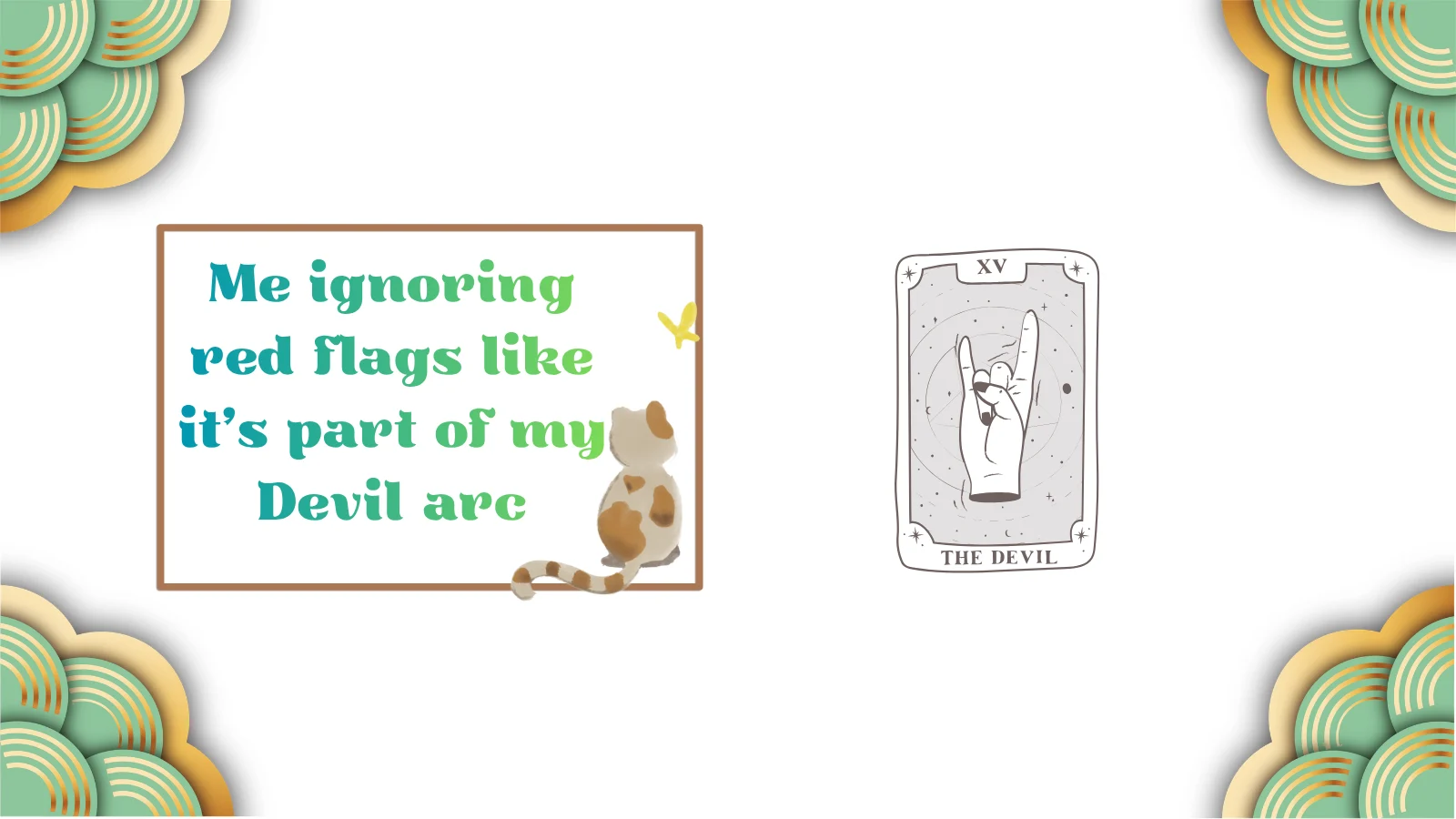
- “Me ignoring red flags like it’s part of my Devil arc.”
5. Meme-style text
- “The Devil card said ‘one more episode’ and now it’s 4am.”
6. Group chat banter
- “We’re all under the Devil card influence tonight, I fear.”
7. Emotional confession
- “I know it’s bad for me but it feels like Devil tarot attachment.”
Similar Slang Words or Expressions
Related internet slang and emotional expressions include:
- Toxic attachment – emotional dependence in unhealthy relationships
- Red flag behavior – warning signs in dating or friendships
- Situationship – undefined romantic connection
- Down bad – extreme emotional or romantic longing
- Self-sabotage – knowingly making harmful choices
- Trauma bond – intense emotional attachment formed through conflict
- Unhealthy coping – relying on destructive habits for emotional relief
These terms often overlap with the figurative meaning of the Devil tarot card in online discussions.
The Devil Tarot Card vs Similar Terms (Comparison Section)
The Devil tarot card vs Toxic attachment
The Devil card is symbolic and broader, representing psychological bondage, while toxic attachment is a behavioral psychology term describing real relationship dynamics.
The Devil tarot card vs Self-sabotage
Self-sabotage is an action-based concept, while the Devil card reflects the emotional or symbolic root of those actions.
The Devil tarot card vs Coping mechanism
Coping mechanisms can be healthy or unhealthy. The Devil card typically highlights unhealthy or compulsive coping patterns.
The Devil tarot card vs Temptation slang
Temptation slang refers to momentary urges, while the Devil card implies ongoing cycles of dependency or repetition.
Is It Formal or Informal?
The Devil tarot card meaning in chat is strictly informal.
It is used in:
- Casual texting
- Social media captions
- Meme culture
- TikTok commentary
- Online astrology discussions
It is not appropriate for professional, academic, or formal communication. Instead, it belongs in expressive, emotional, and humorous digital contexts where metaphorical language is common.
Frequently Asked Questions (FAQ Section)
1. Is The Devil tarot card Gen Z slang?
Yes, in modern internet culture, The Devil tarot card is often used as Gen Z slang. It represents toxic behavior, emotional attachment, or chaotic decisions. Instead of its traditional tarot meaning, it has evolved into a metaphor for situations where someone knowingly makes bad but emotionally driven choices.
2. Is The Devil tarot card trending on TikTok?
Yes, it frequently appears in TikTok edits, tarot readings, and meme videos. Creators use it to describe toxic relationships, addiction cycles, or dramatic emotional storylines. While not a formal trend hashtag, it is part of ongoing tarot aesthetic and emotional storytelling content.
3. Can The Devil tarot card refer to a person?
Yes, in slang usage, it can refer to a person who is seen as manipulative, tempting, or emotionally addictive. However, this is symbolic and not literal. It usually describes the effect someone has on another person rather than labeling their true personality.
4. Is The Devil tarot card sarcastic in texting?
Often, yes. Many users apply it sarcastically or humorously. For example, someone might say they’re “under Devil card influence” when they stay up too late or text someone they shouldn’t. The tone depends heavily on context and online humor culture.
5. Is The Devil tarot card offensive?
Generally, no. It is not considered offensive in most online spaces. However, it can be sensitive if used seriously to describe addiction or mental health struggles. In most cases, it is used casually or humorously in digital slang.
6. Is The Devil tarot card commonly used in texting?
It is not extremely common in everyday texting but appears frequently in online communities, especially among users interested in tarot, astrology, or meme culture. It is more likely to show up in captions or social media discussions than direct private messages.
7. What does The Devil tarot card mean emotionally?
Emotionally, it represents attachment, temptation, obsession, and feeling stuck in cycles that are hard to break. In slang, it often reflects emotional chaos, desire, or repeated unhealthy decisions in relationships or habits.
Quick Summary
- The Devil tarot card in chat = symbolic slang for toxic attachment, temptation, or emotional cycles
- It is metaphorical, not literal or spiritual in texting use
- Common in TikTok, memes, and astrology communities
- Represents emotional dependency, obsession, or self sabotage
- Informal, expressive, and culturally driven internet slang
- Rare in professional or formal communication
One-sentence definition:
In texting slang, The Devil tarot card means being stuck in a tempting, toxic, or emotionally addictive situation.
Final Thoughts
The Devil tarot card meaning in chat reflects how modern internet culture transforms traditional symbolism into emotional shorthand.
Instead of a mystical warning, it becomes a relatable way to describe toxic habits, complicated relationships, or repeated poor decisions.
Gen Z and online communities use it to express self awareness, humor, and emotional honesty in a stylized way.
Its popularity shows how digital communication blends psychology, humor, and symbolism into everyday language.
Leave a Reply