Understanding largesse meaning in chat can be confusing because the word “largesse” is not commonly used in everyday texting or internet slang.
However, it sometimes appears in digital communication, especially in sarcastic, formal, or humor heavy contexts.
In texting, social media posts, and online conversations, words like this often shift from their literal dictionary meaning into ironic or exaggerated usage.
This guide breaks down what “largesse” means in chat, how it’s used online, and whether it fits modern slang culture in 2026.
What Does Largesse Mean in Chat?
In chat and texting slang, “largesse” refers to generosity, usually exaggerated or sarcastic generosity shown by someone giving money, gifts, or favors.
In internet slang, it is often used humorously to describe someone acting overly generous or “performatively kind,” rather than genuine classical usage.
It is not a mainstream texting slang term but appears occasionally in ironic or playful digital communication.
Literal Meaning of Largesse
The word largesse comes from Old French largesse, meaning “generosity” or “liberal giving.” Traditionally, it refers to:
- Willing and abundant giving
- Acts of charity or financial generosity
- Noble or wealthy patrons distributing gifts or money
In formal English, it has a slightly literary tone and is often associated with historical or aristocratic contexts. It is not originally a slang word but a classical vocabulary term used in writing, speeches, and formal descriptions of generosity.
How Is Largesse Used as Slang Online?
In modern digital communication, largesse is occasionally repurposed as ironic or humorous slang, especially in spaces like X (Twitter), TikTok captions, Reddit threads, and Discord chats.
Instead of its serious meaning, it is used to exaggerate everyday generosity in a joking way. For example, someone buying snacks for friends might be described as showing “great largesse.”
This usage often carries:
- Sarcastic tone in texting slang
- Humorous exaggeration in social media expression
- Ironic sophistication in Gen Z meme culture
- Figurative meaning rather than literal charity
- Digital communication humor based on overly formal wording
Gen Z and online communities often enjoy using overly formal or “fancy” words in casual conversations for comedic effect. “Largesse” fits into this trend because it sounds dramatic and outdated compared to typical texting slang.
Is Largesse Commonly Used in Texting?
No, largesse is not commonly used in everyday texting or casual chat conversations. It is considered rare and stylistic rather than mainstream slang.
You are more likely to see it in:
- Meme captions with ironic humor
- Academic or intellectual social media posts
- Sarcastic commentary on generosity or spending
- Reddit discussions involving exaggerated language
- TikTok videos using “fancy vocabulary” humor
Most people still prefer simpler slang like “generous,” “loaded,” “ballin’,” or “big spender” instead of “largesse.”
Examples of Largesse in Text Messages
Here are realistic, modern-style examples showing how “largesse” might appear in digital communication:
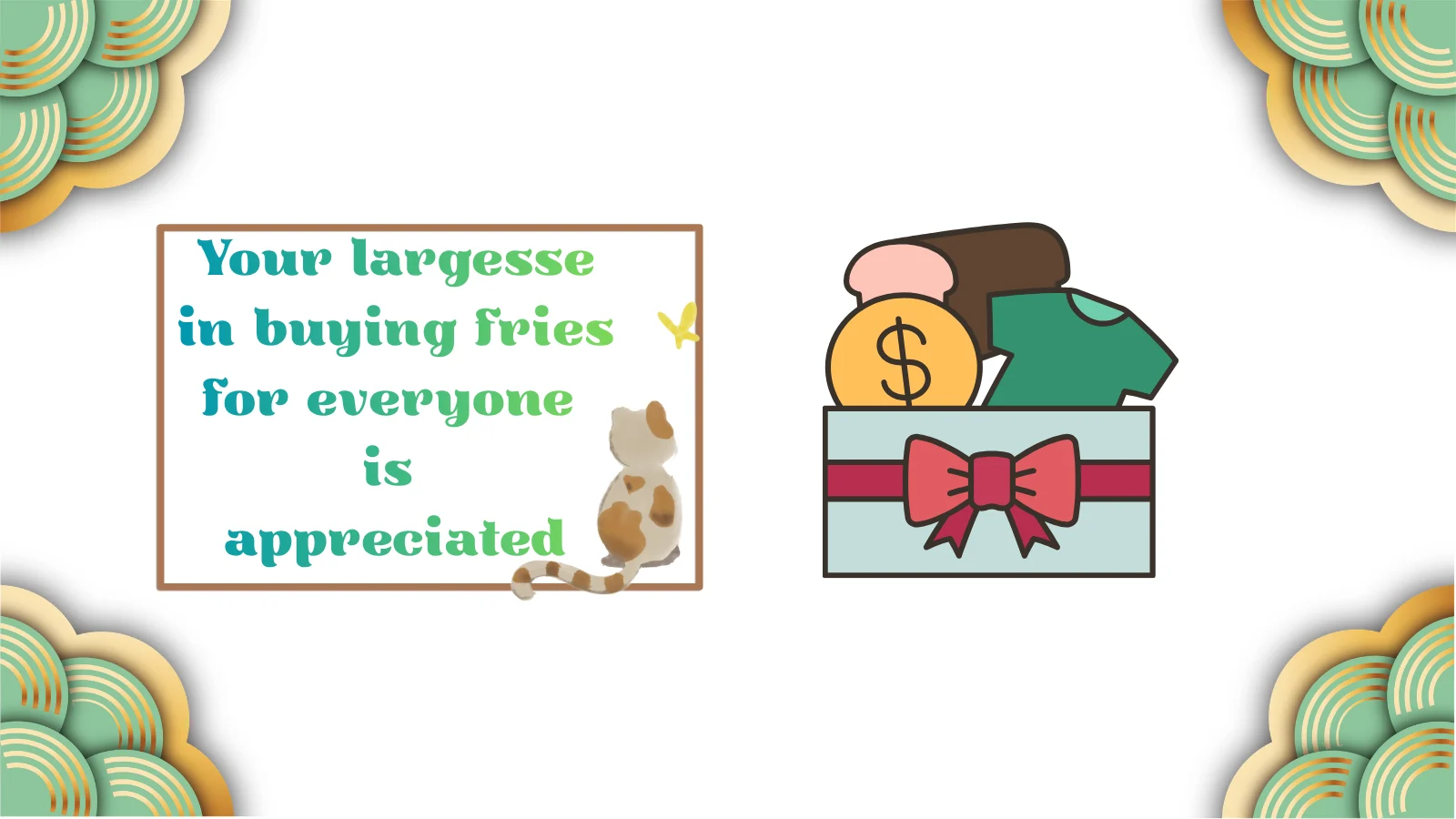
- “Your largesse in buying fries for everyone is appreciated.”
- “She displayed extreme largesse by sharing her Uber Eats discount code 💀”
- Friend 1: “I bought snacks for the group.”
Friend 2: “Wow, such largesse. Truly legendary behavior.” - “His largesse knows no bounds he paid for Netflix this month.”
- “We are in the presence of corporate largesse (they gave us free pizza).”
- “That 20% off coupon is peak largesse energy.”
- “Bro’s largesse is insane, he tipped the delivery guy $2 extra.”
- “Calling it ‘charity’ is wild, it’s just largesse with extra steps.”
These examples show how the word is often used ironically rather than seriously in chat contexts.
Similar Slang Words or Expressions
If you’re trying to understand or replace “largesse” in texting contexts, here are related slang or informal expressions:
- Generosity – neutral and common
- Big spender – someone who spends freely
- Ballin’ – slang for showing wealth or generosity
- Flex – showing off wealth or resources
- Charity vibes – joking reference to giving behavior
- Main character energy – exaggerated self-important generosity
- Philanthropy (ironic use) – joking formal tone
- Gifting spree – casual online shopping generosity
These alternatives are more common in texting slang and social media expression.
Largesse vs Similar Terms (Comparison Section)
Largesse vs Generosity
“Largesse” is more formal and often ironic in chat, while “generosity” is the standard, literal term used in everyday conversation.
Largesse vs Therapy
They are unrelated. “Largesse” refers to giving, while therapy relates to emotional or mental health support.
Largesse vs Coping Mechanism
A coping mechanism is psychological behavior for dealing with stress. Largesse has no emotional coping function—it is about giving.
Largesse vs Comfort Item
A comfort item is something used for emotional reassurance, while largesse refers to acts of giving, often humorously exaggerated in chat.
Is It Formal or Informal?
“Largesse” is primarily a formal, literary word, but its usage in chat transforms it into an informal, ironic expression.
- Casual texting: Rare but humorous
- Social media: Occasionally used for satire
- Professional communication: Acceptable but uncommon
- Academic writing: More appropriate, especially in historical or economic contexts
Overall, it sits in a unique space between formal vocabulary and ironic internet slang.
Frequently Asked Questions (FAQ Section)
Is largesse Gen Z slang?
Not originally. “Largesse” is a formal English word, but Gen Z users sometimes adopt it ironically in memes or captions. It is not a core part of modern slang vocabulary but appears in humorous or exaggerated online communication.
Is largesse trending on TikTok?
It is not widely trending on TikTok. However, it may occasionally appear in niche videos where creators use “fancy or outdated words” for comedic effect or storytelling exaggeration.
Can largesse refer to a person?
No, “largesse” does not refer to a person. It describes an action or quality—specifically, generosity or giving behavior—not an individual identity or nickname.
Is largesse sarcastic?
In chat contexts, yes, it is often used sarcastically. People use it to humorously exaggerate small acts of kindness or spending, turning simple actions into dramatic generosity.
Is largesse offensive?
No, “largesse” is not offensive. It is a neutral word. However, tone matters in chat, and sarcastic usage could sometimes sound mocking depending on context.
Is it commonly used in texting?
No, it is uncommon in everyday texting. Most users prefer simpler slang or direct terms like “generous” or “nice gesture.” “Largesse” is more stylistic or humorous.
Quick Summary
- Meaning: Generosity or exaggerated giving, often used humorously in chat
- Slang usage: Rare, mostly ironic in social media and memes
- Literal meaning: Formal term for generous giving or charity
- Tone: Sarcastic, playful, or stylistically exaggerated in digital communication
- Popularity: Low in texting, niche in online culture
One-sentence definition:
“Largesse in chat means exaggerated or ironic generosity, often used humorously in online conversations rather than as everyday slang.”
Final Thoughts
While “largesse” is not a mainstream texting slang term, it has found a small but interesting place in internet culture through irony and humor.
Most people encounter it in memes, sarcastic posts, or overly formal jokes rather than casual messaging.
Its meaning remains rooted in traditional English generosity but its online usage transforms it into a playful exaggeration.
In 2026 digital communication, it represents how older, formal vocabulary can be reshaped by Gen Z humor into something light, ironic, and expressive.
Leave a Reply