Author: kamiseo652@gmail.com

  • Quim meaning shocking definition that will surprise you now!

    Quim meaning shocking definition that will surprise you now!

    Understanding “quim meaning in chat” has become part of decoding older British slang that occasionally resurfaces in online conversations, memes, and social media threads.

    While not a mainstream Gen Z texting term, it sometimes appears in historical discussions, edgy humor, or misunderstood internet slang breakdowns.

    In this guide, we’ll explain what the word means in texting and internet contexts, its literal definition, how it is used online, whether it’s common in modern chat culture, and provide clear examples.

    We’ll also cover related slang, comparisons, and FAQs so you fully understand its usage in digital communication.


    What Does “Quim” Mean in Chat?

    In texting slang or internet slang discussions, “quim” refers to a vulgar British-English term for female genitalia, specifically used in a crude or offensive way.

    It is not a modern Gen Z expression and is generally considered outdated, explicit, and inappropriate in polite conversation or professional digital communication.

    When it appears in chat or online posts, it is usually used:

    • in shock humor or offensive jokes
    • in historical or linguistic discussions
    • in content explaining old British slang

    It is not a neutral or casual texting abbreviation.


    Literal Meaning of “Quim”

    Literally, “quim” is a slang noun from older British English that refers to female genitalia in a vulgar sense. It has been documented in historical slang dictionaries and is widely considered crude.

    • Origin: Old English / Middle English slang usage in Britain
    • Tone: Offensive, vulgar, and informal
    • Status: Largely obsolete in modern polite language

    Because of its explicit nature, it is rarely used in contemporary everyday speech except for historical reference or deliberate provocation.


    How Is “Quim” Used as Slang Online?

    In modern digital communication, “quim” is not a trending Gen Z slang term, but it occasionally appears in niche online spaces.

    When used online, it typically appears in:

    • Meme culture with dark or shock humor
    • Discussions about historical insults or slang evolution
    • Reddit threads explaining offensive British slang
    • Edgy Twitter/X jokes or irony-based posts

    The tone is usually:

    • sarcastic
    • ironic
    • offensive or provocative
    • historically referential

    It is not part of positive emotional slang or everyday texting vocabulary.


    Is “Quim” Commonly Used in Texting?

    No, “quim” is not commonly used in texting or modern chat apps like WhatsApp, Snapchat, Instagram, TikTok DMs, or Discord.

    Its usage is:

    • extremely rare in casual conversation
    • mostly limited to historical explanations
    • sometimes used in offensive humor contexts

    Among Gen Z users, it is generally unfamiliar or only known through definition videos or slang breakdown content.


    Examples of “Quim” in Text Messages

    Below are contextual examples showing how the term might appear in digital communication. These are for understanding meaning only:

    1. Friend A: “That insult was ancient lol”
      Friend B: “Yeah, like something with ‘quim’ in it 💀”
    2. “I was reading old British slang and saw the word quim… never using that again.”
    3. “Bro stop using words like that, this isn’t the 1800s 💀”
    4. “TikTok explained that ‘quim’ is offensive old slang.”
    5. “This Reddit thread is wild, they’re discussing quim as historical insult slang.”
    6. Caption: “Learning old British insults I should never repeat 😂 #languagehistory”
    7. “That word is NOT safe for group chat 😭”
    8. “Why does old slang always sound 10x worse than modern insults?”

    These examples show it appearing mostly in a metalinguistic or joking context, not everyday messaging.


    Similar Slang Words or Expressions

    Related slang or comparable expressions (in terms of tone or offensiveness) include:

    • archaic insults – old-fashioned offensive words no longer commonly used
    • British slang curses – historical rude terms from UK English
    • NSFW slang terms – explicit internet vocabulary
    • vulgar anatomical slang – crude body-related expressions
    • shock humor language – words used to provoke reactions

    These are not direct synonyms but share contextual similarity in tone or usage environment.


    “Quim” vs Similar Terms (Comparison Section)

    Quim vs Old Slurs

    • “Quim” is a historical vulgar slang term
    • Other slurs may be modern or still actively used

    Quim vs Medical Terms

    • “Quim” is informal and offensive
    • Medical terms are clinical and neutral

    Quim vs Internet Slang (Gen Z)

    • Not part of Gen Z vocabulary
    • Gen Z slang focuses on humor, emotions, and abbreviations instead

    Is It Formal or Informal?

    The term “quim” is strictly informal and vulgar.

    • Casual chat: Not appropriate
    • Professional use: Completely inappropriate
    • Academic context: Only in linguistic/history analysis
    • Social media: Rare, usually ironic or educational

    It should be avoided in respectful communication settings.


    Frequently Asked Questions (FAQ)

    1. Is “quim” Gen Z slang?

    No, “quim” is not Gen Z slang. It is an old British vulgar term that occasionally appears in historical slang discussions or educational content, but it is not part of modern texting culture or youth communication trends.

    2. What does “quim” mean in texting?

    In texting contexts, “quim” refers to an offensive and outdated slang term for female genitalia. It is rarely used in normal conversation and typically appears only in explanatory or humorous internet discussions.

    3. Is “quim” trending on TikTok?

    No, it is not trending as a slang expression on TikTok. If it appears, it is usually in educational videos explaining old or offensive British slang terms rather than active usage by creators.

    4. Is “quim” offensive?

    Yes, “quim” is considered vulgar and offensive in most contexts. It is not polite language and should not be used in respectful conversation, especially in professional or public communication settings.

    5. Can “quim” refer to a person?

    No, “quim” does not refer to a person. It is a slang anatomical term, not a name or identifier for individuals. Any use referring to a person would be incorrect or offensive.

    6. Is it commonly used in texting?

    No, it is not commonly used in texting. Most people do not use or encounter this term in everyday chat apps, and it is largely absent from modern digital communication.

    7. Why does “quim” appear online?

    It appears mainly in discussions about historical slang, linguistic curiosity, or edgy humor content. It is not part of mainstream vocabulary but surfaces in niche online communities.

    8. Is “quim” sarcastic or humorous when used online?

    Sometimes yes, but only in ironic or shock-humor contexts. Its humor depends heavily on tone and audience, and it is not considered safe or casual slang.


    Quick Summary

    • “Quim” is an old British vulgar slang term
    • It refers to female genitalia in an offensive way
    • It is not modern Gen Z or texting slang
    • Usage online is rare and usually ironic or educational
    • It is informal, explicit, and socially inappropriate in most contexts

    One-line definition:
    “Quim” is an outdated and vulgar British slang word used to describe female genitalia, now mostly seen in historical or explanatory contexts rather than modern chat.


    Final Thoughts

    Overall, the keyword “quim meaning in chat” reflects curiosity about an uncommon and historically rooted slang term rather than an active piece of modern internet language.

    While it occasionally surfaces in online discussions, it is not part of everyday texting vocabulary and is widely considered vulgar and outdated.

    Understanding it is more useful for interpreting older British slang references or internet explanations than for practical communication.

    In most real life chat settings, the term should be avoided entirely due to its offensive nature.
  • Green Discharge Meaning Warning Signs and Treatments Guide!!

    Green Discharge Meaning Warning Signs and Treatments Guide!!

    The phrase “green discharge meaning meaning in chat” is often searched by users trying to understand whether it is internet slang, medical terminology, or something used in texting culture.

    In reality, this term is not a common Gen Z slang expression or meme phrase in digital communication.

    Instead, it is primarily a literal medical description that occasionally appears in online conversations, health forums, or private chats.

    In this guide, we’ll break down what it actually means, how (and why) it appears in chat contexts, and whether it has any slang or figurative usage in texting, social media, or modern internet culture.


    What Does green discharge meaning meaning in chat Mean in Chat?

    In texting slang and internet slang contexts, “green discharge” is not a recognized slang expression. When it appears in chat, it usually refers literally to abnormal bodily fluid that is green in color, often discussed in a health-related or medical context. It is not metaphorical, ironic, or commonly used for humor or Gen Z expression online.


    Literal Meaning of green discharge meaning meaning in chat

    Literally, green discharge refers to a green colored fluid that may come from the body, most commonly associated with medical symptoms such as infection or inflammation.

    From a clinical perspective, it is not a slang term but a descriptive medical phrase. It is sometimes mentioned in discussions about health conditions, particularly those involving bacterial infections. The color change is typically associated with the presence of immune response activity in the body.

    Origin-wise, the phrase comes from straightforward medical terminology used in healthcare settings and patient descriptions rather than internet culture.


    How Is green discharge meaning meaning in chat Used as Slang Online?

    Unlike typical Gen Z slang or meme based expressions, “green discharge” is not used metaphorically in digital communication. It does not carry emotional slang meaning, sarcastic tone, or humorous interpretation in mainstream internet culture.

    However, in rare online spaces such as:

    • anonymous health forums
    • medical Q&A threads
    • private messaging between friends discussing symptoms

    …it may appear in a literal, informational context.

    There is no established usage in TikTok slang, Discord communities, or meme culture where the phrase represents something symbolic or figurative.

    So when analyzing semantic SEO intent, it falls under medical language rather than texting slang or social media expression.


    Is green discharge meaning meaning in chat Commonly Used in Texting?

    No, the phrase is not commonly used in everyday texting or social media conversations.

    If it appears in chat, it is usually:

    • A person describing a health symptom
    • A message seeking medical advice
    • A context-specific explanation in private conversation

    It is not trending on TikTok, not part of Gen Z slang dictionaries, and not used as shorthand or emoji-style expression.

    In short, its appearance in chat is rare, functional, and informational—not cultural or stylistic.


    Examples of green discharge meaning meaning in chat in Text Messages

    Here are realistic examples of how the phrase might appear in digital conversations:

    1. “Hey, I noticed some green discharge today, should I be worried?”
    2. “My symptoms include itching and green discharge, I’m booking a doctor appointment.”
    3. “Does green discharge always mean infection or can it be normal?”
    4. “Sorry for the TMI, but I saw green discharge and I’m freaking out a bit.”
    5. “Doctor said green discharge could be a sign of bacterial infection.”
    6. “I searched green discharge meaning and got really anxious 😬”
    7. “Is green discharge something serious or should I wait it out?”
    8. “Posting anonymously: green discharge after antibiotics normal or not?”

    These examples show that the phrase is used in a medical-information-seeking tone, not as slang or humor.


    Similar Slang Words or Expressions

    Although “green discharge” itself is not slang, here are related expressions used in health-related online communication:

    • “symptoms check” – informal way of asking about health issues
    • “not feeling right down there” – euphemistic phrasing
    • “TMI” (too much information) – used when sharing personal health details
    • “infection signs” – general medical reference
    • “body acting weird” – casual Gen Z-style description of health changes

    These terms are more aligned with digital communication slang and emotional expression, unlike the keyword phrase.


    green discharge meaning meaning in chat vs Similar Terms (Comparison Section)

    green discharge vs infection symptom talk

    • “Green discharge” is a specific descriptive symptom
    • “Infection symptom talk” is broader and may include multiple signs

    green discharge vs coping mechanism slang

    • Not related at all; coping mechanisms are emotional/mental health expressions
    • “Green discharge” is physical/medical language

    green discharge vs comfort item or emotional slang

    • Comfort items relate to emotional security (like plush toys or habits)
    • Green discharge has no emotional or metaphorical meaning

    This comparison confirms the keyword is not part of slang ecosystems.


    Is It Formal or Informal?

    The phrase “green discharge” is medical and clinical, but its usage depends on context:

    • Casual texting: Informal when someone describes symptoms to a friend
    • Professional/medical: Formal when used by healthcare providers
    • Academic: Formal in medical research or health education
    • Social media: Informal but rare, usually in health advice discussions

    So while the wording is simple, its meaning belongs to medical communication, not internet slang culture.


    Frequently Asked Questions (FAQ Section)

    1. Is green discharge Gen Z slang?

    No, it is not Gen Z slang. It is a medical term used to describe a physical symptom. It does not have a meme meaning, ironic usage, or cultural slang interpretation in online communities.

    2. Is green discharge trending on TikTok?

    No, it is not trending as a slang phrase. If mentioned on TikTok, it is usually in educational health content or symptom awareness videos, not entertainment or meme content.

    3. Can green discharge refer to a person?

    No, it does not refer to a person. It is strictly a descriptive term related to a bodily symptom and has no identity-based or metaphorical meaning.

    4. Is green discharge used sarcastically in chat?

    Not commonly. Unlike many internet slang terms, it is rarely used humorously or sarcastically because it is associated with health concerns.

    5. Is green discharge offensive?

    No, it is not offensive. However, it is a sensitive medical topic, so it may be considered personal or uncomfortable in casual conversation.

    6. What does green discharge mean in texting?

    In texting, it simply refers to someone describing a medical symptom. It is not slang or shorthand and should be interpreted literally.

    7. Is green discharge dangerous?

    It can sometimes indicate an underlying medical issue, but interpretation depends on context. It should not be assumed to be harmless or serious without professional evaluation.

    8. Why do people search green discharge meaning meaning in chat?

    Most users search it because they encounter the phrase in a message or symptom discussion and are unsure whether it is slang or medical terminology.


    Quick Summary

    • “green discharge meaning meaning in chat” is not slang or internet language
    • It is a literal medical symptom description
    • No Gen Z, TikTok, or meme meaning exists
    • In texting, it appears only in health-related conversations
    • It should be interpreted literally, not figuratively

    One-line definition:
    Green discharge in chat simply refers to someone describing a medical symptom, not a slang expression or internet trend.


    Final Thoughts

    Despite its appearance as a search friendly phrase, “green discharge meaning meaning in chat” is not part of modern slang or Gen Z digital language.

    It is a literal medical description that occasionally surfaces in private conversations, health discussions, or symptom related searches.

    It carries no metaphorical, humorous, or trending internet meaning. In all contexts, it should be understood as a health related term rather than slang.

    Users encountering it online are almost always seeking clarification, not cultural interpretation.

    c

  • Darwinism Meaning Explained With Fascinating Insights 2026

    Darwinism Meaning Explained With Fascinating Insights 2026

    If you’ve recently seen the term Darwinism in a text message, social media comment, meme, or online discussion, you may be wondering about the Darwinism meaning in chat.

    While Darwinism originally refers to a scientific theory about evolution, internet users often use the term in a more casual, humorous, or sarcastic way.

    In modern digital communication, Darwinism can appear in texting slang, meme culture, TikTok videos, Discord chats, Reddit discussions, and social media conversations.

    This guide explains the literal definition, slang meaning, examples, and how people use Darwinism online in 2026.

    What Does Darwinism Mean in Chat?

    In chat, Darwinism is often used as an internet slang expression to describe situations where someone experiences consequences because of their own poor decisions or lack of common sense.

    The term is usually used humorously, sarcastically, or ironically rather than as a scientific reference.

    In texting slang, it can imply that natural consequences are “sorting things out.”

    Literal Meaning of Darwinism

    Darwinism is a scientific theory based on the work of Charles Darwin.

    It refers to the concept of evolution through natural selection, where organisms with traits better suited to their environment are more likely to survive and reproduce.

    The term originated in the 19th century following Darwin’s research and publication of On the Origin of Species.

    In academic contexts, Darwinism relates to biological evolution rather than internet slang.

    How Is Darwinism Used as Slang Online?

    Online, Darwinism has evolved into a figurative expression. Instead of discussing biology, people use it to comment on situations where someone faces predictable consequences due to careless actions.

    In Gen Z humor, meme culture, and social media discussions, Darwinism is often associated with:

    • Obvious mistakes
    • Poor decision-making
    • Risky behavior
    • Self-inflicted problems
    • Ironically deserved outcomes

    As a social media expression, the word is usually sarcastic rather than malicious. Users may joke that “Darwinism is at work” when someone ignores common sense and experiences an expected result.

    The phrase appears frequently in digital communication because it provides a humorous shorthand for describing cause-and-effect situations.

    The tone is often:

    • Sarcastic
    • Ironic
    • Humorous
    • Playfully judgmental
    • Meme-oriented

    Is Darwinism Commonly Used in Texting?

    Darwinism is not among the most common texting slang terms like “LOL,” “FR,” or “IMO.” However, it remains recognizable in certain online communities.

    The term is most likely to appear on:

    • TikTok
    • Reddit
    • Discord
    • X (formerly Twitter)
    • YouTube comments
    • Meme pages

    Its usage tends to be niche and context-specific rather than mainstream everyday texting slang.

    Many younger users encounter the term through viral videos, internet memes, or humorous commentary rather than direct messaging conversations.

    Examples of Darwinism in Text Messages

    Here are some realistic examples showing the Darwinism meaning in texting and online conversations.

    Example 1

    Alex: He touched the electric fence after reading the warning sign.

    Jordan: That’s Darwinism at work.

    Example 2

    Mia: My cousin locked his keys in the car twice today.

    Ella: Peak Darwinism behavior.

    Example 3

    Sam: He skipped the update and lost all his files.

    Chris: Darwinism strikes again.

    Example 4

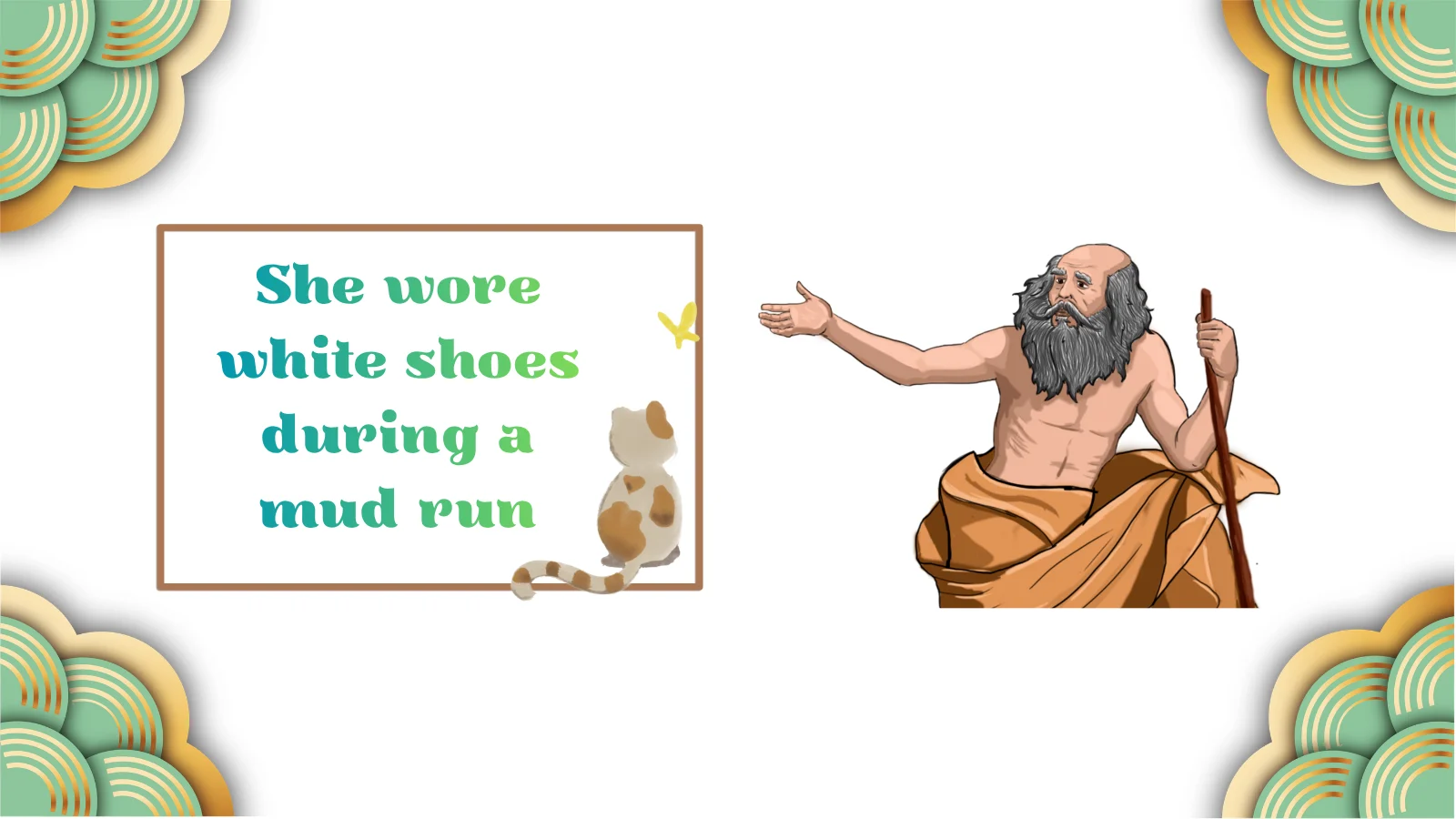
    Taylor: She wore white shoes during a mud run.

    Morgan: That’s basically Darwinism.

    Example 5

    Ethan: Dude jumped into the lake before checking the water temperature.

    Jake: Darwinism speedrun.

    Example 6

    TikTok Comment

    “Bro really ignored every warning sign. Darwinism in action 😂”

    Example 7

    Discord Chat

    User 1: “I clicked the suspicious link.”

    User 2: “Darwinism moment.”

    Example 8

    Instagram Caption

    “When your friend ignores all advice and instantly regrets it. #Darwinism”

    Similar Slang Words or Expressions

    Several slang terms share a similar meaning or tone with Darwinism online.

    FAFO

    “FAFO” stands for “F*** Around and Find Out.” It describes situations where people experience consequences after making poor choices.

    Skill Issue

    A popular gaming and meme expression used sarcastically when someone fails due to their own actions.

    Natural Consequences

    A less slang-oriented phrase describing outcomes that result directly from a person’s behavior.

    Self-Own

    Refers to accidentally creating problems for yourself.

    Karma

    Often used when someone experiences consequences that seem deserved due to previous actions.

    Play Stupid Games, Win Stupid Prizes

    A common internet saying describing predictable negative outcomes.

    Darwinism vs Similar Terms (Comparison Section)

    Darwinism vs Karma

    Darwinism usually focuses on poor decision-making and common sense failures. Karma often implies moral consequences related to past behavior.

    Darwinism vs FAFO

    FAFO is more direct and aggressive. Darwinism tends to be more sarcastic and observational.

    Darwinism vs Natural Consequences

    Natural consequences is a neutral phrase. Darwinism is typically used humorously or ironically in internet culture.

    Darwinism vs Skill Issue

    Skill issue focuses on incompetence or lack of ability. Darwinism emphasizes the consequences of questionable decisions.

    Is It Formal or Informal?

    Darwinism can be used in both formal and informal contexts, but the intended meaning changes depending on the situation.

    Casual Conversations

    Commonly used as a joke or sarcastic observation among friends.

    Social Media

    Frequently appears in memes, comment sections, and viral content.

    Professional Settings

    Using Darwinism sarcastically in workplace communication is generally not recommended because it may sound dismissive or judgmental.

    Academic Contexts

    In academic writing, Darwinism refers to evolutionary theory rather than internet slang.

    Frequently Asked Questions (FAQ Section)

    Is Darwinism Gen Z slang?

    Not exactly. Darwinism originated as a scientific term, but Gen Z and younger internet users have adapted it into meme culture. While not exclusive to Gen Z, it is commonly used in online communities where sarcastic humor and internet slang are popular.

    Is Darwinism trending on TikTok?

    Darwinism occasionally appears in TikTok comments and videos discussing obvious mistakes or humorous failures. It is not a top trending slang term, but it remains recognizable in meme-related content and reaction videos.

    Can Darwinism refer to a person?

    Usually no. Darwinism generally refers to a situation, event, or consequence rather than describing an individual. However, someone might jokingly call another person’s actions “Darwinism in action.”

    Is Darwinism sarcastic?

    Yes, most online uses of Darwinism are sarcastic or ironic. People often use it humorously to point out situations where someone ignored common sense and experienced predictable results.

    Is Darwinism offensive?

    Generally, Darwinism is not considered offensive. However, using it to mock someone’s mistake or misfortune may come across as insensitive depending on the context and audience.

    Is Darwinism commonly used in texting?

    It is moderately recognizable but not extremely common. The term appears more often in social media comments, memes, Reddit threads, and Discord conversations than in everyday text messaging.

    What does Darwinism mean in texting slang?

    In texting slang, Darwinism typically refers to someone facing consequences because of their own poor decisions. The meaning is usually humorous, sarcastic, and figurative rather than scientific.

    Does Darwinism always relate to evolution online?

    No. While the word comes from evolutionary theory, most internet users employ it metaphorically to comment on common-sense failures, risky choices, or self-inflicted problems.

    Quick Summary

    • Darwinism originally refers to evolution through natural selection.
    • In chat, it often has a figurative meaning.
    • It is commonly used sarcastically or humorously.
    • The term appears in memes, TikTok comments, Reddit threads, and Discord chats.
    • It usually describes someone experiencing predictable consequences.
    • It is more common online than in everyday texting.
    • The slang meaning differs from the scientific definition.

    One-Sentence Definition: In chat and internet slang, Darwinism refers to situations where someone experiences the predictable consequences of their own poor decisions, often in a humorous or sarcastic way.

    Literal Meaning: A scientific theory of evolution through natural selection.

    Slang Meaning: A joking reference to common sense failures and self-inflicted consequences.

    Final Thoughts

    Understanding the Darwinism meaning in chat requires recognizing the difference between its scientific roots and its modern internet usage.

    While Darwinism remains an important concept in biology, online communities often use the term as a humorous social media expression describing obvious mistakes and predictable outcomes.

    Whether seen on TikTok, Reddit, Discord, or in text messages, the slang meaning is typically sarcastic, ironic, and intended as lighthearted commentary rather than a serious discussion of evolution.

  • Grieving Meaning Explained With Powerful Real Life Insights 2026

    Grieving Meaning Explained With Powerful Real Life Insights 2026

    If you’ve seen the word grieving in a text message, social media post, TikTok comment, or online conversation, you may be wondering about the grieving meaning in chat.

    While the term has a traditional emotional definition related to loss, it can also appear in modern digital communication with slightly different nuances depending on context.

    In texting, slang, and internet culture, words often evolve beyond their dictionary meanings.

    This guide explains what grieving means in chat, its literal definition, how people use it online, examples from real conversations, and whether it qualifies as internet slang in 2026.

    What Does Grieving Mean in Chat?

    In chat and texting, grieving usually means experiencing sadness, emotional pain, or distress after a loss, disappointment, or upsetting event.

    While it is not traditional texting slang, internet users sometimes use it figuratively to express being emotionally affected by something, whether serious or humorous.

    Literal Meaning of Grieving

    The word grieving comes from the verb grieve, which means to suffer sorrow, especially after losing someone or something important.

    Traditionally, grieving refers to the emotional process people go through following:

    • The death of a loved one
    • The end of a relationship
    • A major life change
    • Personal loss or disappointment

    In psychology and everyday language, grieving is considered a natural emotional response to loss.

    How Is Grieving Used as Slang Online?

    Although grieving is primarily a standard English word rather than pure internet slang, online communities often use it in exaggerated or figurative ways.

    On platforms like TikTok, X (Twitter), Discord, Instagram, and Reddit, users may say they’re “grieving” over things that aren’t literally tragic. This usage is often humorous, dramatic, or emotionally expressive.

    Examples include:

    • Losing a favorite TV character
    • Missing a concert
    • Failing an exam
    • Finishing a beloved series
    • Seeing a favorite creator quit social media

    In digital communication, grieving can function as an emotional slang expression that emphasizes how strongly someone feels about a situation.

    Depending on context, the tone may be:

    • Emotional
    • Dramatic
    • Ironic
    • Sarcastic
    • Humorous
    • Relatable

    Many Gen Z users intentionally exaggerate emotions online, making figurative uses of grieving common in meme culture.

    Is Grieving Commonly Used in Texting?

    Yes, but not as a dedicated slang term.

    Most people still use grieving with its traditional meaning when discussing real emotional loss. However, younger internet users increasingly use it metaphorically in texting and social media conversations.

    You are most likely to encounter it on:

    • TikTok
    • Instagram
    • Snapchat
    • Discord
    • Reddit
    • Group chats
    • Fan communities

    Its popularity often depends on context rather than trends. Unlike abbreviations such as LOL or FR, grieving is a regular word that has gained additional online meanings.

    Examples of Grieving in Text Messages

    Here are realistic examples showing how grieving may appear in modern chats.

    Example 1

    Alex: Did you finish the final episode?

    Jordan: Yeah. I’m literally grieving right now.

    Example 2

    Sam: They canceled the concert.

    Chris: Stop, I’m still grieving.

    Example 3

    Taylor: I failed the driving test.

    Morgan: Give yourself time. It’s okay to be grieving the result.

    Example 4

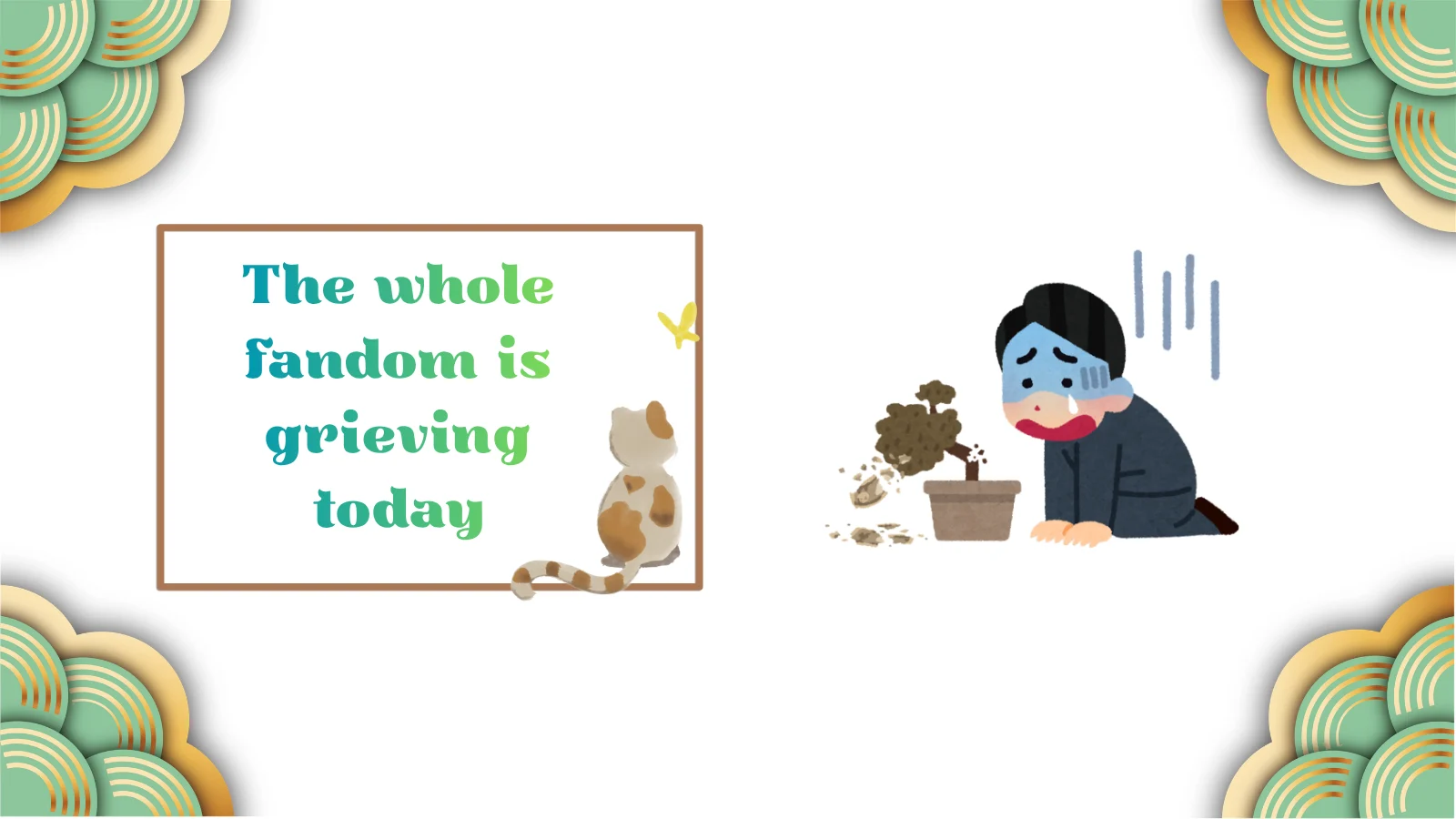
    Emma: My favorite character died.

    Liam: The whole fandom is grieving today.

    Example 5

    Noah: My phone fell into the pool.

    Mia: I’d be grieving too.

    Example 6

    Ava: Summer vacation is over.

    Olivia: Currently grieving my freedom.

    Example 7

    Lucas: They discontinued my favorite snack.

    Ella: I’m grieving with you.

    Social Media Caption Examples

    • “Still grieving the end of that series.”
    • “Me grieving a concert I never got tickets for.”
    • “Currently grieving my weekend.”
    • “The fandom is grieving today.”
    • “Grieving the version of me that had free time.”

    Similar Slang Words or Expressions

    Several online expressions share emotional similarities with grieving.

    Heartbroken

    Describes intense sadness, often related to relationships or disappointment.

    Devastated

    A stronger emotional reaction that signals significant distress.

    Mourning

    Traditionally refers to loss, but can also be used humorously online.

    Down Bad

    A Gen Z expression indicating emotional struggle, obsession, or disappointment.

    In My Feelings

    A popular phrase meaning emotionally affected or sentimental.

    Crying

    Frequently used online even when someone is not literally crying.

    Example:

    “I’m crying over this ending.”

    Not Okay

    An informal internet expression indicating emotional impact.

    Example:

    “I’m not okay after watching that.”

    Grieving vs Similar Terms (Comparison Section)

    Grieving vs Mourning

    Grieving refers to the internal emotional process of coping with loss, while mourning often describes the external expression of that grief.

    Grieving vs Heartbroken

    Heartbroken typically focuses on emotional pain from relationships or disappointment. Grieving can involve a broader range of losses.

    Grieving vs Devastated

    Devastated describes the intensity of an emotion. Grieving describes an ongoing emotional process.

    Grieving vs In My Feelings

    “In my feelings” is casual internet slang for being emotional. Grieving generally implies a deeper emotional impact.

    Is It Formal or Informal?

    The answer depends on context.

    Casual Use

    Common in text messages, group chats, and social media.

    Example:

    “I’m grieving the end of that show.”

    Professional Use

    Appropriate when discussing genuine loss or emotional hardship.

    Example:

    “She is grieving the loss of a family member.”

    Academic Use

    Frequently used in psychology, counseling, sociology, and healthcare discussions.

    Social Media Use

    Often appears in both serious and humorous contexts. Users may exaggerate the term for comedic effect.

    Frequently Asked Questions (FAQ Section)

    Is grieving Gen Z slang?

    Not exactly. Grieving is a standard English word, but Gen Z users often apply it humorously or figuratively online. This expanded usage gives the term a slang-like feel in social media conversations and texting.

    Is grieving trending on TikTok?

    The word itself is not a dedicated TikTok trend, but it frequently appears in videos, captions, and comments discussing emotional reactions, fandom culture, entertainment, and personal experiences.

    Can grieving refer to a person?

    Yes. Someone who is experiencing emotional sorrow after a loss can be described as grieving. The word typically refers to a person’s emotional state rather than their identity.

    Is grieving sarcastic online?

    Sometimes. Internet users may sarcastically say they are grieving over minor inconveniences, fictional events, or humorous situations. Context determines whether the usage is serious or ironic.

    Is grieving offensive?

    No. Grieving is a normal and widely accepted word. However, using it jokingly in situations involving real loss may be viewed as insensitive depending on the audience.

    Is grieving commonly used in texting?

    Yes. People use grieving both literally and figuratively in text messages. The figurative version is especially common among younger users discussing entertainment, relationships, or personal disappointments.

    What does grieving mean in social media comments?

    In social media comments, grieving often means someone feels emotionally affected by an event, piece of content, announcement, or disappointment. The expression may be serious or exaggerated for comedic effect.

    Does grieving always mean someone died?

    No. While grieving is often associated with death, it can also refer to emotional responses to breakups, major life changes, lost opportunities, or other meaningful losses.

    Quick Summary

    • Grieving traditionally means experiencing sorrow after a loss.
    • It is commonly used in texting and online conversations.
    • The term is not pure internet slang but often has figurative online uses.
    • Gen Z users may use it dramatically or humorously.
    • It can describe reactions to real-life events, fictional stories, entertainment, or personal disappointments.
    • Context determines whether the meaning is serious or playful.

    One-sentence definition: In chat and texting, grieving means feeling emotional sadness or loss, either literally or as an exaggerated online expression.

    Literal meaning: Coping with genuine loss or sorrow.

    Slang meaning: Dramatically expressing emotional disappointment, attachment, or sadness in online culture.

    Final Thoughts

    Understanding the grieving meaning in chat requires looking at both its traditional definition and its modern internet usage.

    the word still primarily refers to genuine emotional loss, social media users increasingly employ it in humorous, exaggerated, and relatable ways.

    Whether someone is grieving a personal setback, the ending of a favorite show, or a missed opportunity, the term has become a flexible expression of emotional impact in today’s digital communication landscape.

  • 5 De Mayo Meaning Decoded The Ultimate Celebration Story

    5 De Mayo Meaning Decoded The Ultimate Celebration Story

    If you’ve seen “5 de Mayo” mentioned in a text message, social media post, meme, or online conversation and wondered about its meaning, you’re not alone.

    While the phrase traditionally refers to a Mexican holiday, its usage in chat, texting slang, and digital communication can sometimes carry different cultural, humorous, or contextual meanings.

    In this guide, you’ll learn the 5 de Mayo meaning in chat, its literal definition, how people use it online, whether it’s considered slang, and real examples from texting and social media conversations.

    What Does 5 de Mayo Mean in Chat?

    In chat and online conversations, 5 de Mayo usually refers to the Mexican holiday celebrated on May 5th.

    In texting slang and internet culture, it may also be used humorously to reference parties, celebrations, Mexican themed events, food, drinks, or festive plans.

    The meaning is generally literal rather than a true slang term, though context can make it playful or ironic.

    Literal Meaning of 5 de Mayo

    Cinco de Mayo (Spanish for “Fifth of May”) commemorates Mexico’s victory over the French Empire at the Battle of Puebla on May 5, 1862.

    Although often mistaken for Mexico’s Independence Day, Cinco de Mayo celebrates a specific military victory and has become a widely recognized cultural holiday, especially in the United States.

    The phrase itself literally means:

    • Cinco = Five
    • De = Of
    • Mayo = May

    Therefore, “5 de Mayo” simply means May 5th.

    How Is 5 de Mayo Used as Slang Online?

    While 5 de Mayo is not technically internet slang, it is frequently used as a social media expression and cultural reference in online conversations.

    Gen Z users on TikTok, Instagram, Discord, Snapchat, and X often use the term when talking about:

    • Party plans
    • Celebrations
    • Food events
    • Group gatherings
    • Mexican-themed festivities
    • Weekend excitement

    In digital communication, the phrase can take on a humorous or exaggerated tone.

    For example:

    • “It’s basically 5 de Mayo all weekend.”
    • “We’re treating every Friday like 5 de Mayo.”

    In these contexts, the phrase becomes a figurative meaning for celebration and fun rather than simply referring to the actual holiday.

    This usage is especially common in memes and casual texting where users exaggerate excitement for social events.

    Is 5 de Mayo Commonly Used in Texting?

    Yes, but mostly during the weeks leading up to May 5th.

    Unlike common texting slang such as “LOL,” “Rizz,” or “FR,” 5 de Mayo is not an everyday abbreviation or internet acronym.

    Its popularity tends to increase around:

    • May 5 celebrations
    • Social media trends
    • Holiday-related posts
    • Event planning chats
    • Restaurant promotions
    • Party invitations

    Outside of seasonal discussions, the phrase appears less frequently in everyday texting.

    Examples of 5 de Mayo in Text Messages

    Here are some realistic examples showing how people use 5 de Mayo in chats and social media.

    Example 1

    Alex: Any plans this weekend?

    Jordan: Yeah, we’re celebrating 5 de Mayo downtown.

    Example 2

    Friend 1: Taco night?

    Friend 2: Absolutely. Early 5 de Mayo vibes.

    Example 3

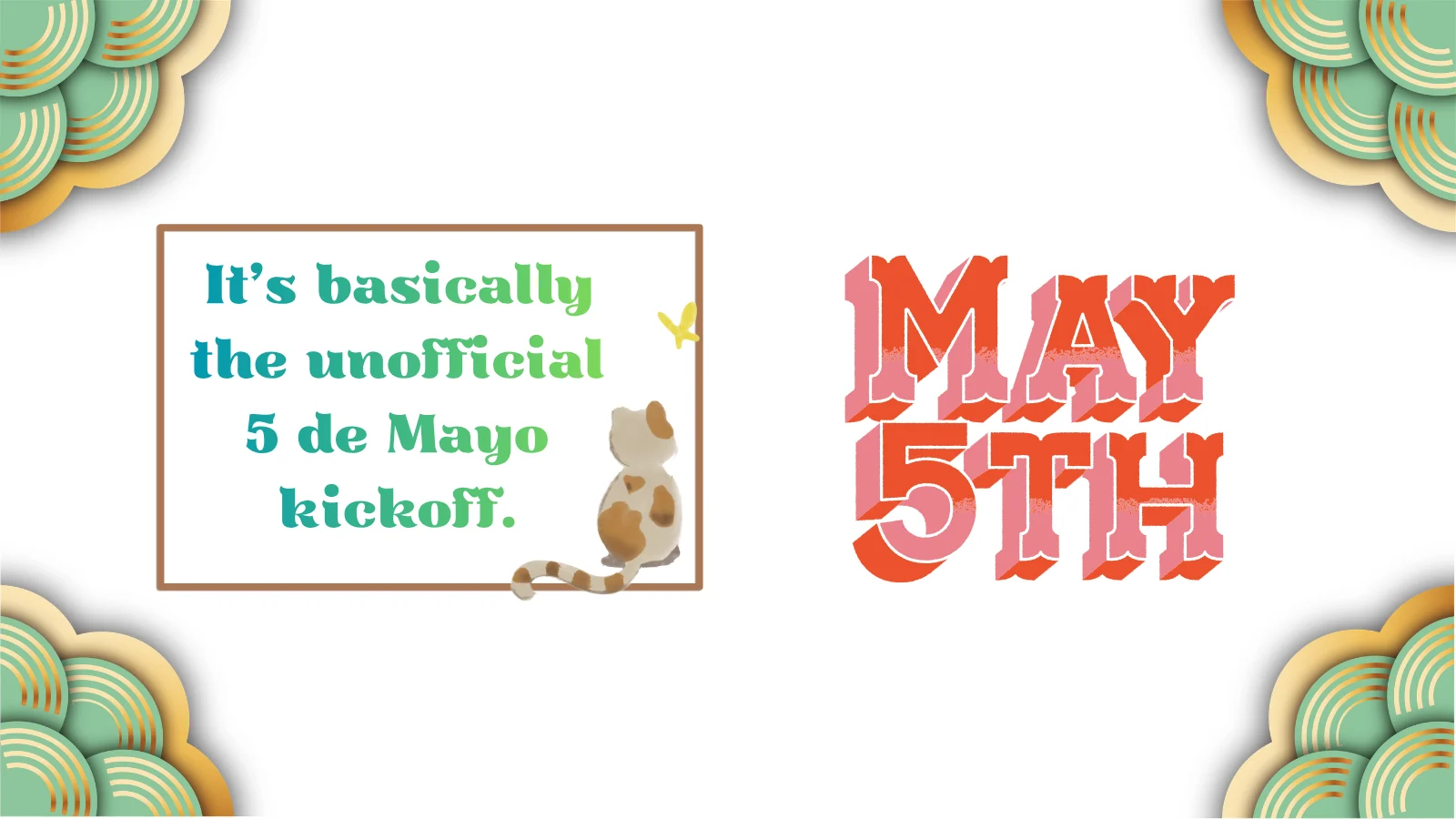
    Sam: Why is everyone going out tonight?

    Chris: It’s basically the unofficial 5 de Mayo kickoff.

    Example 4

    Taylor: What should we wear?

    Mia: Something festive. It’s a 5 de Mayo event.

    Example 5

    Caption:

    “5 de Mayo energy all weekend 🌮🎉”

    Example 6

    Tweet/Post:

    “Counting down to 5 de Mayo like it’s a national holiday for my friend group.”

    Example 7

    Discord Chat

    User 1: Anyone joining the meetup?

    User 2: Yep. Got that 5 de Mayo spirit already.

    Example 8

    Instagram Story

    “Food, friends, and good vibes. Happy 5 de Mayo!”

    Similar Slang Words or Expressions

    Although 5 de Mayo is not a true slang term, several expressions are used similarly in online conversations.

    Party Mode

    A phrase indicating someone is ready to celebrate or have fun.

    Turn Up

    Internet slang meaning to party, celebrate, or get excited.

    Fiesta

    A Spanish word often used online to describe a festive gathering.

    Lit

    A Gen Z expression meaning exciting, energetic, or enjoyable.

    Vibes

    Used to describe the mood or atmosphere of an event.

    Celebration Mode

    A casual expression indicating excitement about a special occasion.

    These terms frequently appear alongside 5 de Mayo-related conversations on social media.

    5 de Mayo vs Similar Terms (Comparison Section)

    5 de Mayo vs Cinco de Mayo

    Both refer to the same holiday. “Cinco de Mayo” is the traditional Spanish name, while “5 de Mayo” is simply an English numeric variation.

    5 de Mayo vs Mexican Independence Day

    Many people confuse these holidays.

    • 5 de Mayo: Battle of Puebla victory.
    • Mexican Independence Day: Celebrated on September 16.

    They commemorate entirely different historical events.

    5 de Mayo vs Fiesta

    5 de Mayo refers to a specific date and holiday.

    Fiesta refers to any celebration or party, regardless of the occasion.

    Is It Formal or Informal?

    The phrase can be used in both formal and informal settings depending on context.

    Casual Conversations

    Very common in texts, social media posts, group chats, and event planning.

    Professional Settings

    Acceptable when discussing holiday promotions, cultural events, marketing campaigns, or schedules.

    Academic Context

    Used formally when discussing Mexican history, culture, or historical events.

    Social Media

    Frequently appears in captions, hashtags, memes, and event announcements.

    Overall, the phrase is flexible and can fit both professional and casual communication.

    Frequently Asked Questions (FAQ Section)

    Is 5 de Mayo Gen Z slang?

    No. 5 de Mayo is not considered Gen Z slang. It is the name of a holiday. However, Gen Z users may reference it humorously online when discussing celebrations, parties, or festive events.

    Is 5 de Mayo trending on TikTok?

    Yes, 5 de Mayo-related content often trends seasonally around May. TikTok users frequently post food videos, event recaps, cultural celebrations, and humorous content connected to the holiday.

    Can 5 de Mayo refer to a person?

    No. The phrase refers to a holiday or date rather than a person. In texting and internet conversations, it is rarely used to describe an individual.

    Is 5 de Mayo used sarcastically online?

    Sometimes. People may jokingly compare ordinary gatherings to 5 de Mayo celebrations to exaggerate how festive or exciting an event feels.

    Is 5 de Mayo offensive?

    The phrase itself is not offensive. However, users should be respectful when discussing cultural traditions and avoid stereotypes or insensitive jokes.

    Is 5 de Mayo commonly used in texting?

    Yes, especially around early May. It frequently appears in group chats, event invitations, social media posts, and discussions about celebrations.

    Does 5 de Mayo have a hidden slang meaning?

    Generally, no. Most uses refer directly to the holiday. Any additional meaning usually comes from context, humor, or cultural references rather than established slang.

    What does 5 de Mayo mean on social media?

    On social media, it typically refers to holiday celebrations, cultural events, food, music, parties, or festive activities connected to May 5th.

    Quick Summary

    • 5 de Mayo refers to the Mexican holiday celebrated on May 5.
    • It commemorates the Battle of Puebla in 1862.
    • The phrase is usually used literally rather than as internet slang.
    • Online users often associate it with celebrations, parties, and festive events.
    • It commonly appears on TikTok, Instagram, Snapchat, Discord, and group chats.
    • The term may be used humorously or figuratively to describe a fun atmosphere.
    • It is not considered official Gen Z slang.

    Simple Definition: 5 de Mayo means May 5th and usually refers to the holiday commemorating Mexico’s victory at the Battle of Puebla. In chat and social media, it may also symbolize celebration, party culture, or festive vibes.

    Final Thoughts

    The 5 de Mayo meaning in chat is usually straightforward: it refers to the well known holiday celebrated on May 5th.

    While it isn’t a traditional texting slang term, internet users often use it as a cultural reference for parties, gatherings, food, and celebration.

    Understanding the context is important because the phrase can be used literally, humorously, or symbolically in digital communication.

    Whether you see it in a text message, meme, or TikTok caption, it’s generally connected to festive and social experiences.

  • Marilag Meaning Uncovered What Everyone Is Talking About

    Marilag Meaning Uncovered What Everyone Is Talking About

    If you’ve recently seen the word “marilag” in a text message, TikTok comment, Facebook post, or online conversation, you may be wondering about the marilag meaning in chat.

    While the term has existed in the Filipino language for a long time, it has gained renewed popularity across social media platforms, where users employ it as both a compliment and a cultural expression.

    In this guide, you’ll learn what marilag means in texting, its literal definition, how it’s used in internet slang, examples from real digital communication, and whether it’s considered a trending Gen Z expression in 2026.

    What Does Marilag Mean in Chat?

    In chat, marilag is a Filipino word used as a compliment that means beautiful, elegant, charming, or graceful.

    s a texting slang expression, it is often used to praise someone’s appearance, personality, style, or overall vibe.

    While the word has a literal meaning, it is commonly used online in a figurative and affectionate way to express admiration.

    Literal Meaning of Marilag

    The word marilag comes from the Filipino language and traditionally means beautiful, splendid, magnificent, graceful, or elegant.

    It is often associated with refined beauty, dignity, and attractiveness. Unlike casual compliments that simply mean “pretty” or “good-looking,” marilag carries a deeper sense of admiration and appreciation.

    In literature and traditional Filipino writing, the term has long been used to describe people, places, and things that possess exceptional beauty or grace.

    How Is Marilag Used as Slang Online?

    As social media culture evolves, many traditional words gain new life through internet trends. The marilag slang meaning remains close to its original definition, but online users often use it more casually and creatively.

    On TikTok, X, Facebook, Instagram, and Discord, marilag is frequently used as a social media expression to compliment someone in a poetic or dramatic way. Instead of saying “you’re beautiful,” users may say “ang marilag mo” to sound more expressive or culturally connected.

    Among Gen Z users, the word is often used:

    • As a genuine compliment
    • In aesthetic posts
    • In romantic captions
    • In humorous exaggerations
    • In admiration posts about celebrities

    The term functions as emotional slang because it communicates appreciation, affection, and admiration. Depending on context, it can feel sweet, sincere, playful, or slightly dramatic.

    In digital communication, marilag is generally positive and rarely carries a negative meaning.

    Is Marilag Commonly Used in Texting?

    Yes, but its popularity depends on the audience and platform.

    Marilag is not considered mainstream global internet slang like “rizz,” “sus,” or “slay.” However, it has become increasingly visible among Filipino users and communities that engage with Filipino culture online.

    You are most likely to encounter the word on:

    • TikTok
    • Facebook
    • Instagram
    • X (Twitter)
    • Messenger chats
    • Discord servers
    • YouTube comments

    The term is especially popular when users want to sound more expressive, romantic, or poetic than standard compliments allow.

    While not universally used in everyday texting, it has become recognizable enough to be considered a modern social media trend.

    Examples of Marilag in Text Messages

    Here are some natural examples showing the marilag text message meaning in context.

    Example 1

    Friend 1: Did you see her graduation photos?

    Friend 2: Yes! Ang marilag niya talaga.

    Example 2

    A: New profile pic alert 👀

    B: Grabe, marilag naman!

    Example 3

    A: I’m not sure about this outfit.

    B: Trust me, you look marilag.

    Example 4

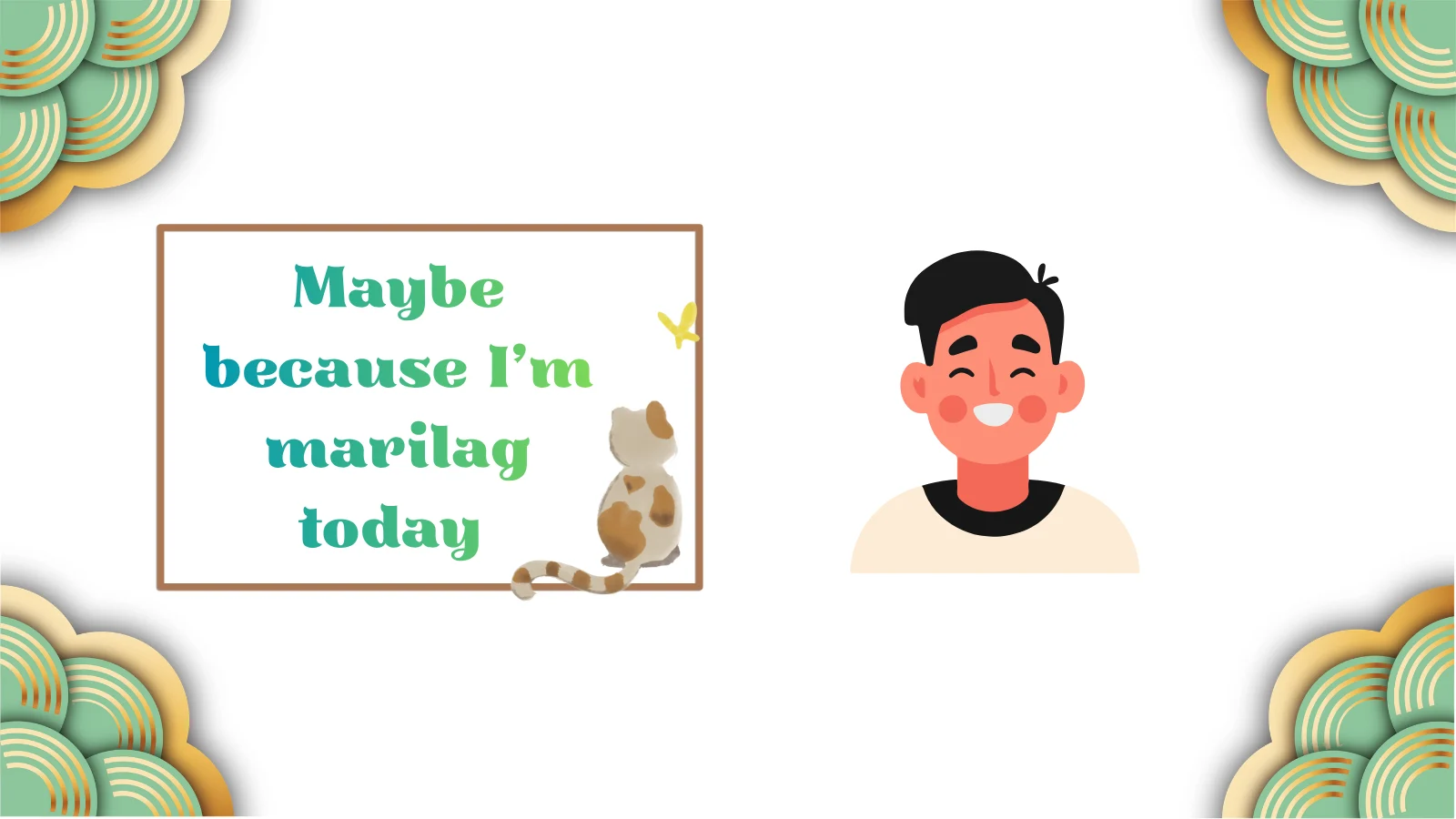
    A: Why is everyone liking your post?

    B: Maybe because I’m marilag today 😂

    Example 5

    A: Have you seen that actress lately?

    B: She’s absolutely marilag.

    Example 6

    Caption:

    “Feeling marilag today ✨”

    Example 7

    Instagram Comment:

    “Marilag as always ❤️”

    Example 8

    TikTok Comment:

    “The confidence, the style, the energy—marilag!”

    These examples show how the word can be used sincerely, humorously, or affectionately.

    Similar Slang Words or Expressions

    Several expressions share a similar meaning with marilag.

    Beautiful

    A straightforward compliment that focuses on physical attractiveness.

    Gorgeous

    A stronger version of beautiful, often used for exceptional looks.

    Stunning

    Describes someone who leaves a strong visual impression.

    Slay

    Popular Gen Z slang used when someone looks amazing or performs exceptionally well.

    Queen

    An internet compliment expressing admiration and respect.

    Radiant

    Refers to someone who appears bright, confident, and attractive.

    Elegant

    Highlights grace, sophistication, and refined beauty.

    Serving Looks

    A modern social media phrase meaning someone looks fashionable or impressive.

    While these expressions are similar, marilag often feels more poetic and culturally rich.

    Marilag vs Similar Terms (Comparison Section)

    Marilag vs Beautiful

    Both refer to attractiveness, but marilag often conveys a deeper sense of elegance and grace rather than simple physical beauty.

    Marilag vs Gorgeous

    Gorgeous usually emphasizes striking appearance. Marilag can describe both physical beauty and admirable qualities.

    Marilag vs Slay

    Slay is modern Gen Z internet slang focused on confidence and style. Marilag is more traditional and poetic.

    Marilag vs Elegant

    Elegant focuses on sophistication and refinement. Marilag combines elegance with beauty and charm.

    Marilag vs Pretty

    Pretty is casual and common. Marilag feels more expressive, meaningful, and culturally distinctive.

    Is It Formal or Informal?

    The answer depends on context.

    Casual Usage

    Very common in chats, text messages, comments, captions, and social media posts.

    Professional Usage

    Generally uncommon in business communication unless discussing literature, language, or culture.

    Academic Usage

    Can appear in linguistic, literary, or cultural discussions.

    Social Media Usage

    One of the most common environments for the word today. Users frequently include it in captions, comments, compliments, and admiration posts.

    Overall, marilag is flexible but is most often used in casual and social settings.

    Frequently Asked Questions (FAQ Section)

    Is marilag Gen Z slang?

    Not originally. Marilag is a traditional Filipino word that has been adopted by many Gen Z users on social media. Its recent popularity comes from online trends rather than from being created by Gen Z.

    Is marilag trending on TikTok?

    Yes. The term has appeared frequently in TikTok videos, captions, and comments where users compliment someone’s appearance, style, or personality. Its poetic tone makes it appealing for aesthetic content.

    Can marilag refer to a person?

    Absolutely. It is commonly used to describe a person’s beauty, elegance, charm, or graceful presence. Most online uses refer to people rather than objects.

    Is marilag sarcastic?

    Usually no. Most uses are sincere compliments. However, like many internet expressions, it can occasionally be used jokingly or sarcastically depending on the context and tone.

    Is marilag offensive?

    No. Marilag is considered a positive and respectful word. It is used to express admiration and appreciation rather than criticism or insult.

    Is marilag commonly used in texting?

    It is moderately common among Filipino speakers and online communities. While not universal texting slang, it appears regularly in chats, comments, and social media interactions.

    What does marilag mean in texting?

    In texting, marilag generally means beautiful, elegant, charming, or admirable. It is often used as a compliment toward someone’s appearance or overall vibe.

    Does marilag only refer to physical beauty?

    No. The term can also describe inner qualities such as grace, confidence, dignity, charm, and admirable character.

    Quick Summary

    • Marilag is a Filipino word meaning beautiful, elegant, graceful, or charming.
    • The term is commonly used in texting and social media as a compliment.
    • It functions as a positive social media expression.
    • Gen Z users have helped increase its popularity online.
    • It is frequently seen on TikTok, Facebook, Instagram, and messaging apps.
    • The word is generally sincere rather than sarcastic.
    • It is not offensive and carries positive connotations.
    • Its slang meaning remains close to its original dictionary definition.

    One-sentence definition: Marilag is a Filipino expression used in chat and social media to describe someone or something as beautiful, graceful, elegant, or admirable.

    Final Thoughts

    Understanding the marilag meaning in chat helps you appreciate both its cultural roots and its growing role in modern digital communication.

    Unlike many internet slang terms that change meaning over time, marilag has retained its positive and elegant essence.

    Whether used in a text message, TikTok comment, Instagram caption, or online conversation, it remains a thoughtful and expressive way to compliment someone’s beauty, charm, confidence, or grace in 2026.

  • Cruising Meaning Funny Definition That Will Surprise You 2026

    Cruising Meaning Funny Definition That Will Surprise You 2026

    The term “cruising meaning in chat” has become increasingly searched as slang evolves across texting platforms, TikTok, Discord, and everyday digital conversations.

    Depending on context, “cruising” can mean relaxing, moving smoothly through something, casually browsing, or even looking for something or someone in a social setting.

    In internet slang, meanings shift quickly, so understanding tone and context is essential.

    This guide breaks down the cruising meaning in chat, texting slang, and social media usage in a clear, modern 2026 friendly way.


    What Does Cruising Mean in Chat?

    In texting slang and internet slang, “cruising” in chat usually means moving through something easily, casually exploring, or relaxing without stress.

    It can also refer to casually looking around or passing time in a chill way.

    The meaning depends heavily on context and can range from “taking it easy” to “scrolling or browsing without purpose.”

    In most digital communication, it is figurative, not literal transportation related cruising.


    Literal Meaning of Cruising

    Literally, cruising means traveling at a steady speed, usually in a vehicle, boat, or aircraft, without rushing or stopping frequently.

    The term originally comes from transportation and naval language, where “to cruise” meant moving smoothly over long distances.

    Over time, the word expanded beyond transportation and entered everyday speech and texting slang as a metaphor for ease, flow, and relaxed movement through tasks or environments.


    How Is Cruising Used as Slang Online?

    In modern digital communication, especially among Gen Z users, “cruising” has developed multiple figurative meanings depending on context.

    It is commonly used in texting slang, social media expression, and meme culture.

    Here are the main interpretations:

    • Relaxing or taking it easy: “I’m just cruising today” means chilling without stress.
    • Scrolling or browsing casually: Used when moving through TikTok, Instagram, or Reddit without a goal.
    • Doing something smoothly: Completing tasks effortlessly (“I’m cruising through homework”).
    • Looking around casually: Sometimes used to describe exploring places or spaces online.

    The tone is usually informal, relaxed, and neutral, often carrying an emotional sense of ease or detachment.

    In some contexts, it can also imply passive searching or observing.

    In Gen Z slang culture, it fits into broader patterns of effortless living language, where people describe life in low pressure, aesthetic, or humorous ways.


    Is Cruising Commonly Used in Texting?

    Yes, but its popularity is moderate rather than viral slang-level trending.

    “Cruising” is not a newly invented Gen Z word, but it remains widely understood across age groups. It appears more often in:

    • Casual texting conversations
    • Gaming chats (“cruising through levels”)
    • Social media captions
    • Travel or lifestyle posts

    However, it is not typically used as a top-tier meme word like “slay,” “rizz,” or “no cap.” Instead, it sits in the category of stable, evergreen internet slang that remains relevant over time.


    Examples of Cruising in Text Messages

    Here are realistic 2026-style chat examples showing different meanings:

    1. Relaxing meaning

    • A: What are you doing today?
    • B: Nothing much, just cruising at home 😌

    2. Browsing social media

    • A: Why are you so quiet in the group chat?
    • B: Just cruising TikTok lol, didn’t see messages

    3. Doing tasks easily

    • A: How’s the assignment going?
    • B: Honestly I’m cruising through it, it’s easy

    4. Gaming context

    • Player 1: You still stuck on level 5?
    • Player 2: Nah, I’m cruising now 🚀

    5. Casual outing

    • A: Where are you?
    • B: Just cruising around the city, no plan

    6. Social caption

    • “Sunday mood: cruising and vibing.”

    7. Work context (informal)

    • “Work’s slow today, just cruising through emails.”

    8. Group chat humor

    • “Me in life right now: cruising but low-key lost.”

    Similar Slang Words or Expressions

    Several slang expressions overlap with the meaning of “cruising” in chat:

    • Chilling – relaxing without stress
    • Vibing – enjoying a mood or moment
    • Coasting – moving through something with minimal effort
    • Gliding – smooth, effortless progress
    • Taking it easy – general calm activity
    • Browsing – casually scrolling or looking around
    • Lounging – physically or mentally relaxing

    These terms all share the idea of low-effort, relaxed digital or real-life behavior.


    Cruising vs Similar Terms (Comparison Section)

    Cruising vs Chilling

    • Cruising often implies movement or activity with ease
    • Chilling is more about pure rest or relaxation

    Cruising vs Coasting

    • Cruising feels more casual and neutral
    • Coasting can imply doing the minimum effort, sometimes slightly negative

    Cruising vs Vibing

    • Cruising is behavioral (what you’re doing)
    • Vibing is emotional (how you feel in the moment)

    Cruising vs Scrolling

    • Cruising is broader (life or activity-based)
    • Scrolling is specific to digital content browsing

    Is It Formal or Informal?

    The word “cruising” in chat is informal slang.

    It is suitable for:

    • Casual conversations ✔
    • Social media captions ✔
    • Text messaging ✔
    • Gaming chats ✔

    It is NOT suitable for:

    • Academic writing ✘
    • Professional business communication ✘ (unless literal meaning is used)
    • Formal reports ✘

    In professional contexts, it should be replaced with clearer terms like “reviewing,” “browsing,” or “progressing smoothly.”


    Frequently Asked Questions (FAQ)

    1. Is cruising Gen Z slang?

    Yes, but not exclusively. While Gen Z uses it in texting and online chats, “cruising” is older slang that predates modern internet culture. Gen Z mainly uses it in a relaxed, humorous way rather than as a trending viral term.

    2. Is cruising trending on TikTok?

    It appears occasionally on TikTok captions and lifestyle content, but it is not a major viral slang term. It’s more of a background expression used in captions about relaxing, traveling, or casual living.

    3. Can cruising refer to a person?

    Yes, but rarely in texting slang. It can describe someone moving through life or tasks smoothly. However, context matters because it can also have unrelated meanings in different communities.

    4. Is cruising sarcastic?

    It can be. People sometimes say “I’m just cruising” sarcastically when they are actually busy or stressed, using humor to downplay their situation.

    5. Is cruising offensive?

    In most texting contexts, no. However, in some real-world contexts, the term may carry sensitive meanings, so tone and audience matter.

    6. Is cruising commonly used in texting?

    Yes, but moderately. It is widely understood and used in casual conversations, though not considered peak viral slang.

    7. What does cruising through something mean?

    It means completing something easily or smoothly without difficulty, such as work, games, or tasks.

    8. Does cruising always mean relaxing?

    Not always. It can mean relaxing, browsing, or progressing easily through something, depending on context.


    Quick Summary

    • Cruising meaning in chat: Doing something casually, smoothly, or without stress
    • Main usage: Relaxing, browsing, or progressing easily
    • Tone: Informal, neutral, sometimes humorous
    • Literal meaning: Traveling at a steady speed
    • Slang usage: Common in texting, gaming, and social media
    • Context matters: Meaning changes based on conversation

    Final Thoughts

    “Cruising” in chat is a flexible slang term that fits naturally into modern digital communication.

    It usually reflects ease, relaxation, or smooth progress through activities, whether that’s scrolling social media, finishing tasks, or simply taking a break.

    While not a flashy viral Gen Z word, it remains widely understood and consistently used across texting and online platforms.

    Its meaning depends heavily on context, making it a useful but subtle expression in everyday casual conversations.

  • Epic Power Boost 2025-11-23 0:11:50 Revealed Now Shocked!!??

    Epic Power Boost 2025-11-23 0:11:50 Revealed Now Shocked!!??

    The phrase “[2025-11-23 0:11:50] meaning in chat” is usually searched when someone sees a timestamp like string in a message and wants to understand what it means.

    In most cases, this format appears in texting apps, chat logs, screenshots, or exported conversations.

    It is not traditional slang, but rather a digital timestamp used in online communication, messaging systems, and logs.

    This guide breaks down what it means, how it is used in chat contexts, whether it has any slang interpretation, and how Gen Z and online communities interpret such time stamped text in modern digital communication.


    What Does [2025-11-23 0:11:50] Mean in Chat?

    The string [2025-11-23 0:11:50] in chat typically represents a timestamp in texting slang and digital messaging contexts, showing the exact date and time a message was sent or recorded.

    It is not slang itself but a structured time format used in logs, chat exports, or system generated messages to indicate when something happened.


    Literal Meaning of [2025-11-23 0:11:50]

    Literally, this format breaks down as:

    • 2025-11-23 → Date (November 23, 2025)
    • 0:11:50 → Time (12:11:50 AM in 24-hour format)

    This is a standard ISO-style timestamp format, commonly used in:

    • Chat applications
    • Server logs
    • Database records
    • Messaging exports
    • Automated system messages

    It does not carry emotional or slang meaning by itself. It simply records time data in a structured format.


    How Is [2025-11-23 0:11:50] Used as Slang Online?

    While the timestamp itself is not slang, internet users especially on platforms like TikTok, Discord, WhatsApp, and Telegram sometimes treat timestamps in a playful or contextual way.

    In Gen Z communication culture, timestamps can be used to:

    • Emphasize “exact moment drama” in conversations
    • Highlight receipts or proof in arguments
    • Add dramatic effect to screenshots
    • Create meme-style storytelling (“at 0:11 AM things went wrong…”)

    So while the format is technical, its usage context can become part of internet slang expression, especially in storytelling or meme culture.

    It falls under digital communication and emotional slang usage, even though the structure remains literal.


    Is [2025-11-23 0:11:50] Commonly Used in Texting?

    Yes and no. The timestamp format is:

    • Very common in system-generated chats
    • Rare in casual texting between individuals

    You will most often see it in:

    • Chat backups
    • Screenshots of conversations
    • Customer support logs
    • Gaming chat exports
    • AI/chatbot histories

    However, most people do not manually type this format in normal texting. It is usually auto-generated.


    Examples of [2025-11-23 0:11:50] in Text Messages

    Here are realistic examples of how this timestamp appears in digital conversations:

    Example 1: Chat Log

    • [2025-11-23 0:11:50] Alex: Are you still awake?
    • [2025-11-23 0:12:10] Sam: Yeah, can’t sleep lol

    Example 2: Screenshot Context

    • “Look what they said at [2025-11-23 0:11:50] 😭”

    Example 3: Drama Highlight

    • “At [2025-11-23 0:11:50], everything changed.”

    Example 4: Gaming Chat

    • [2025-11-23 0:11:50] Player1: Behind you!

    Example 5: Work Chat

    • [2025-11-23 0:11:50] System: Meeting started

    Example 6: Social Media Caption

    • “It happened at 0:11 AM… I still remember the exact timestamp.”

    Example 7: Discord Message Export

    • [2025-11-23 0:11:50] User123: brb

    Similar Slang Words or Expressions

    Although not slang itself, similar digital expressions include:

    • “timestamp” → marker of time in messages
    • “receipts” → proof of conversation
    • “logs” → recorded chat history
    • “DM time” → referring to direct message moments
    • “screen record moment” → highlighting evidence in chats
    • “real-time proof” → showing exact timing of events

    These all fall under internet slang culture and digital communication tracking.


    [2025-11-23 0:11:50] vs Similar Terms

    Timestamp vs Chat Message

    • Timestamp: Shows when something happened
    • Chat message: Shows what was said

    Timestamp vs Receipt

    • Timestamp: Neutral time record
    • Receipt: Evidence used in arguments or drama

    Timestamp vs Memory Reference

    • Timestamp: Exact digital time
    • Memory reference: Human recollection of an event

    This shows that timestamps are factual, while slang terms add emotional or social meaning.


    Is It Formal or Informal?

    The timestamp [2025-11-23 0:11:50] is:

    • Formal: Used in system logs, databases, and official records
    • Informal: When shared in screenshots or memes
    • Neutral: It carries no emotional tone by itself

    In professional environments, it is strictly technical. In social media, it can become part of storytelling or humor.


    Frequently Asked Questions (FAQ)

    1. Is [2025-11-23 0:11:50] Gen Z slang?

    No, it is not Gen Z slang. It is a standard timestamp format used in digital systems. However, Gen Z users sometimes incorporate timestamps into memes or storytelling for dramatic effect.

    2. Is [2025-11-23 0:11:50] trending on TikTok?

    Not directly. Timestamps themselves are not trending, but they often appear in TikTok screenshots or storytelling videos where creators highlight specific moments in conversations.

    3. Can [2025-11-23 0:11:50] refer to a person?

    No, it does not refer to a person. It only indicates a date and time when something was sent or recorded in a chat or system log.

    4. Is it sarcastic or emotional?

    The timestamp itself is neutral, but users may use it in emotional or sarcastic contexts when sharing dramatic chat moments or “proof” of conversations.

    5. Is it commonly used in texting?

    Not in normal texting. It appears mostly in automated chat logs, exports, or screenshots rather than casual manual messages.

    6. Is it offensive?

    No, it is completely neutral and non-offensive. It is purely a technical format used to mark time.

    7. Why do chats show timestamps like this?

    Chats show timestamps to track when messages were sent, which helps with context, order, and record keeping in conversations.


    Quick Summary

    • Meaning: A digital timestamp showing date and time in chat logs
    • Type: Technical format, not slang
    • Usage: System logs, chat exports, screenshots
    • Slang relevance: Only contextual in memes or storytelling
    • Tone: Neutral and informational

    In short, [2025-11-23 0:11:50] is not slang—it is a structured timestamp used in digital communication to show when a message was sent or recorded.


    Final Thoughts

    The phrase “[2025-11-23 0:11:50]” is best understood as a structured timestamp rather than slang or coded internet language.

    It reflects the exact moment a message was sent in a chat system, often appearing in logs, exports, or screenshots.

    While it can take on storytelling or meme value in social media contexts, its core purpose remains technical and factual.

    Understanding this helps avoid confusion when interpreting chat data and improves clarity in digital communication across platforms.

  • US Meaning Explained Shocking Facts You Must Know Today

    US Meaning Explained Shocking Facts You Must Know Today

    The phrase “us ] meaning in chat” is increasingly searched by people trying to decode modern texting slang and unusual message fragments they see on social media or messaging apps.

    In today’s digital communication landscape spanning TikTok, Discord, Instagram DMs, and casual texting small typing quirks or bracket-like expressions often confuse users.

    This guide explains what “us ]” can mean in chat, how it appears in internet slang, and whether it has a consistent meaning or is just a typo or formatting artifact in online conversations.


    What Does [KEYWORD] Mean in Chat?

    The expression “us ]” in chat or texting slang does not have a fixed dictionary meaning.

    In most cases, it is either a typing error, unfinished bracket, or formatting leftover from emojis, edits, or copied text.

    It is not a standardized internet slang term.

    In digital communication, it may sometimes appear accidentally when users type “us” followed by a misplaced closing bracket.


    Literal Meaning of [KEYWORD]

    Literally, “us” refers to a pronoun meaning “you and me” or a group including the speaker.

    The bracket “]” has no inherent meaning in this context and is typically used in programming, formatting, or emoticons.

    When combined as “us ]”, it does not form a recognized linguistic structure in English or internet slang dictionaries.

    There is no historical or etymological origin for “us ]” as a phrase it is generally accidental rather than intentional language.


    How Is [KEYWORD] Used as Slang Online?

    Even though “us ]” is not official texting slang, internet users sometimes encounter it in informal digital spaces. In rare cases, it can appear in:

    • Unfinished emoticons or kaomoji-style expressions
    • Broken formatting from copied messages
    • Discord or gaming chat glitches
    • Rapid typing errors in Gen Z texting culture

    In modern digital communication, especially on platforms like TikTok comments or Snapchat chats, unusual symbols often get interpreted as emotional slang or hidden meaning. However, “us ]” does not carry any consistent emotional tone such as sarcasm, humor, or irony.

    Instead, it is best categorized as noise in text rather than meaningful slang.


    Is [KEYWORD] Commonly Used in Texting?

    No, “us ]” is not commonly used in texting or social media language. Unlike popular Gen Z slang terms such as “bet,” “no cap,” or “slay,” this phrase has no cultural adoption.

    You might occasionally see it in:

    • Auto-corrected messages
    • Broken captions on Instagram or TikTok
    • Gaming chat logs
    • Fast-typed Discord conversations

    Overall, it is rare, unintentional, and not trend-based.


    Examples of [KEYWORD] in Text Messages

    Here are realistic examples showing how “us ]” might accidentally appear in digital conversations:

    1. Friend 1: “We should hang out later”
      Friend 2: “yeah that sounds good us ] lol I meant us”
    2. DM example:
      “I miss us ]” → corrected to “I miss us”
    3. Discord chat glitch:
      “gg guys us ]” (typing error during fast gameplay)
    4. TikTok comment:
      “this reminds me of us ]😭” (unintentional bracket)
    5. Snapchat message:
      “it’s just us ] and the vibes tonight”
    6. Group chat correction:
      “us ]?? why did I type that 💀”
    7. Caption attempt:
      “just us ] against the world” (uncorrected typo)

    These examples show that the phrase is usually accidental and immediately corrected by users.


    Similar Slang Words or Expressions

    While “us ]” itself has no meaning, it is often confused with or appears near real slang expressions such as:

    • “us” – refers to a couple or group bonding emotionally
    • “us against the world” – emotional loyalty phrase
    • “lol / lmao” – reaction markers in texting slang
    • “:] or :)” – emoticon-style expressions
    • “no cap” – truth emphasis in Gen Z slang
    • “bet” – agreement or confirmation

    These are actual texting slang or emotional slang expressions, unlike the accidental bracketed form.


    [KEYWORD] vs Similar Terms (Comparison Section)

    “us ]” vs “us”

    • “us” is meaningful pronoun usage
    • “us ]” is usually a typo or formatting error

    “us ]” vs emoticons

    • emoticons like “:)” or “:]” are intentional
    • “us ]” is unstructured and accidental

    “us ]” vs slang phrases

    • slang phrases carry cultural meaning
    • “us ]” has no semantic or emotional meaning

    Is It Formal or Informal?

    “Us ]” is not a formal expression and not even a valid informal slang term. It does not belong in academic writing, professional communication, or structured messaging.

    • Casual texting: accidental use only
    • Social media: rare typo appearance
    • Professional/academic: never used
    • Gaming chats: occasional fast-typing artifact

    It should be treated as a keyboard or formatting error rather than language.


    Frequently Asked Questions (FAQ Section)

    1. Is “us ]” Gen Z slang?

    No, “us ]” is not Gen Z slang. It is not recognized in youth culture or internet slang dictionaries. It usually appears due to typing mistakes or formatting glitches rather than intentional usage. Gen Z slang tends to include terms like “rizz,” “bet,” or “no cap,” which carry clear meanings.

    2. Is “us ]” trending on TikTok?

    No, “us ]” is not trending on TikTok. While TikTok often popularizes slang and expressions, this phrase does not appear as a trend or hashtag. If it shows up in captions or comments, it is typically accidental or part of a typo rather than a viral expression.

    3. Can “us ]” refer to a person?

    No, “us ]” does not refer to any person or identity. The word “us” can refer to people collectively, but the bracket adds no meaning. It is not a name, nickname, or coded reference to anyone in digital communication.

    4. Is “us ]” sarcastic or emotional?

    No, it is not inherently sarcastic or emotional. Unlike expressive slang or emojis, “us ]” does not convey tone. If emotional meaning is attached, it comes from surrounding text—not the bracketed expression itself.

    5. Is “us ]” offensive?

    No, “us ]” is not offensive. It has no linguistic or cultural meaning that could be interpreted as harmful. At worst, it is simply a typing error or formatting artifact in chat messages.

    6. Is “us ]” commonly used in texting?

    No, it is not commonly used in texting. You will rarely see it in intentional communication. When it appears, it is almost always accidental and immediately corrected by the sender.

    7. What does “us ]” mean in internet slang?

    In internet slang, “us ]” has no established meaning. It is not listed in slang dictionaries or meme culture references. It is best understood as an unintentional symbol combination rather than a real expression.


    Quick Summary

    • “us ]” has no official meaning in chat or texting slang
    • It is usually a typo, formatting error, or accidental bracket use
    • “us” means a group including the speaker, but the bracket adds nothing
    • It is not Gen Z slang, not trending, and not symbolic
    • Any meaning comes from context, not the phrase itself

    Final Thoughts

    In modern digital communication, unusual text fragments like “us ” often appear due to fast typing, autocorrect issues, or formatting glitches rather than intentional slang usage.

    Unlike established internet slang terms, this expression does not carry cultural, emotional, or symbolic meaning.

    It should not be interpreted as Gen Z language or trending TikTok slang.

    Instead, it is best understood as a harmless error in messaging.

    Context always matters, but in this case, the phrase itself contributes no real meaning.

  • Ultimate Guide to >� Meaning That Shockingly Cracks Fans

    Ultimate Guide to >� Meaning That Shockingly Cracks Fans

    The “� meaning in chat” query usually appears when users see a strange box, question mark, or broken symbol like “�” in messages, social media posts, or texts.

    This article explains what this symbol means in digital communication, why it appears, and how it is interpreted in texting, slang, and online platforms.

    We’ll also cover whether it has any slang meaning, how it relates to encoding errors, and how people use or misunderstand it in modern internet culture.


    What Does � Mean in Chat?

    The symbol “�” in chat is not actual slang.

    It is a Unicode replacement character that appears when a device cannot properly display a missing, corrupted, or unsupported character in texting slang or digital communication.

    It usually indicates a technical encoding issue rather than an intentional message or emotional expression.


    Literal Meaning of �

    Literally, “�” is called the Replacement Character (U+FFFD) in Unicode standards.

    It is used by systems like iOS, Android, Windows, and web browsers when they fail to decode a character from a message or file.

    This happens when:

    • The text encoding is broken (UTF-8 mismatch)
    • The font does not support the symbol
    • Data is corrupted during transfer
    • Emojis or special characters fail to render

    It has no linguistic meaning and is not part of any language or slang origin.


    How Is � Used as Slang Online?

    Technically, “�” is not a slang term, but internet users have creatively adopted it in meme culture and social media expression.

    In Gen Z communities, TikTok comments, Discord chats, and Twitter/X posts, people sometimes use it humorously to:

    • Represent confusion or “broken brain” moments
    • Mimic glitch effects in digital communication
    • Express irony or sarcasm when something is “unspeakable”
    • Replace censored or filtered words
    • Add chaotic or “aesthetic glitch” energy to messages

    Even though it is not real emotional slang, it has become part of figurative meaning in online culture, often used for comedic or ironic effect.


    Is � Commonly Used in Texting?

    In normal texting, “�” is not intentionally used by people. Instead, it appears accidentally when messages fail to load correctly.

    However, it is commonly seen on:

    • WhatsApp (when devices mismatch encoding)
    • Instagram captions with unsupported emojis
    • Discord messages with broken fonts
    • Web forums with corrupted data imports
    • SMS messages between different operating systems

    So while not a real slang word, it is frequently encountered in digital environments.


    Examples of � in Text Messages

    Here are realistic examples of how the symbol appears in chats:

    1. Friend 1: “I just saw your message lol �”
      Friend 2: “Wait what did I even send?”
    2. User: “That party was insane �”
      (Emoji or word failed to load)
    3. Group chat: “We’re meeting at 7�30 pm”
      (Broken colon or special character)
    4. Instagram caption: “Feeling good �✨”
      (Glitchy emoji rendering)
    5. Discord message: “This update is so �”
      (Filtered or unsupported word replaced)
    6. Text from friend: “I think you meant � not that word”
      (Censored content placeholder)
    7. Twitter/X post: “My phone is acting like � today”
      (Used humorously as glitch aesthetic)
    8. Meme caption: “When life gives you � just reboot”
      (Intentional use for comedic effect)

    Similar Slang Words or Expressions

    While “�” itself is not slang, it connects to other internet expressions:

    • Glitch – digital error or malfunction vibe
    • Bugged out – something behaving strangely
    • 404 energy – confusion or missing information
    • Lagging brain – humorous mental slowdown
    • Crashed – overwhelmed or broken state
    • Broken text / corrupted font – similar technical issue
    • Censorship asterisks (****) – hidden or filtered words

    These terms often appear in texting slang and meme culture to describe digital or emotional confusion.


    � vs Similar Terms (Comparison Section)

    � vs Glitch

    • = technical rendering error
    • Glitch = intentional or visible system malfunction

    � vs Censorship Symbols (****)

    • = broken character display
    • ****** = deliberate hiding of words

    � vs Emoji Expression

    • = missing or unsupported emoji
    • Emoji = intentional emotional expression

    � vs Typing Error

    • = encoding issue
    • Typing error = human mistake in input

    Is It Formal or Informal?

    The symbol “�” is purely informal and technical, not a linguistic or communicative word.

    • Casual use: Only appears in chats or social media glitches
    • Professional use: Only in debugging, coding, or data analysis
    • Academic use: In discussions about Unicode or computer science
    • Social media: Sometimes used humorously in memes or captions

    It is not appropriate as intentional communication in formal writing.


    Frequently Asked Questions (FAQ)

    1. Is � Gen Z slang?

    No, “�” is not Gen Z slang. It is a Unicode replacement character used when text or emojis fail to display correctly. However, Gen Z users sometimes use it humorously in memes or captions to represent glitchy or chaotic digital energy.


    2. Is � trending on TikTok?

    Not as a formal trend, but it occasionally appears in TikTok captions or comments when creators use glitch aesthetics or ironic humor. It is more of a visual artifact than an intentional slang term.


    3. Can � refer to a person?

    No, “�” cannot refer to a person. It is not a word or identifier. It simply represents missing or unreadable text in messaging apps or web platforms.


    4. Is it sarcastic?

    By itself, “�” is not sarcastic. However, users sometimes use it in sarcastic or humorous contexts to exaggerate confusion or emotional “glitching” in conversations.


    5. Is it offensive?

    No, “�” is not offensive. It is a neutral system-generated symbol. Any offensive meaning depends entirely on the surrounding text, not the symbol itself.


    6. Why do I see � instead of emojis?

    You see “�” when your device cannot properly decode an emoji or special character. This usually happens due to outdated software, missing fonts, or encoding mismatches between devices.


    7. Is � used in texting slang meaning?

    No, it does not have a real texting slang meaning. It is a technical placeholder that sometimes gets adopted creatively in internet culture.


    8. Can � be fixed?

    Yes. Updating your device, app, or operating system usually fixes the issue. It ensures proper Unicode support so emojis and special characters display correctly.


    Quick Summary

    • “�” = Unicode replacement character
    • Appears when text or emojis fail to load
    • Not real slang or intentional message
    • Common in chats, apps, and social media glitches
    • Sometimes used humorously in meme culture
    • Always indicates missing or corrupted character data

    One-line definition:
    “� in chat is a system generated symbol showing that a character or emoji could not be properly displayed.”


    Final Thoughts

    The symbol “�” in chat is not slang, but a technical placeholder that appears when digital systems fail to interpret text correctly.

    While it has no literal or emotional meaning, internet culture has turned it into a humorous glitch symbol in memes and social media posts.

    Understanding it helps users distinguish between actual communication and encoding errors.

    In most cases, it simply signals missing data, not hidden meaning, making it more of a system artifact than a form of language.