If you’ve come across the term “speculation” in chat, you might be wondering what it really means in texting, slang, or online conversations.
In today’s fast moving digital communication especially across social media, group chats, and forums words like “speculation” can carry slightly different tones depending on context.
This guide breaks down the speculation meaning in chat, covering its literal definition, slang usage, and how it shows up in modern texting culture.
What Does Speculation Mean in Chat?
In chat and internet slang, speculation refers to guessing or forming opinions without confirmed facts. It’s often used in texting slang to describe theories, assumptions, or predictions usually about drama, events, or trending topics. The meaning is mostly figurative, implying uncertainty rather than proven truth.
Literal Meaning of Speculation
The word speculation comes from the Latin speculari, meaning “to observe or guess.”
In standard usage, speculation refers to:
- Forming a theory without solid evidence
- Guessing about future events or unknown situations
It’s commonly used in fields like finance, journalism, and everyday conversation when discussing uncertain outcomes.
How Is Speculation Used as Slang Online?
In digital communication, speculation takes on a more casual and cultural tone. It’s widely used across texting slang, TikTok comments, Reddit threads, and Discord chats.
Online, it often means:
- Making guesses about someone’s behavior
- Predicting outcomes (relationships, trends, drama)
- Sharing unverified theories
In Gen Z slang, the tone can vary:
- Neutral: “Just speculation, but…”
- Sarcastic: “Oh yeah, pure speculation 🙄”
- Dramatic: Used in gossip or fan theories
It’s a key part of social media expression, especially when people discuss rumors, plot twists, or influencer drama.
Is Speculation Commonly Used in Texting?
Yes—but not as a “slang word” in the traditional sense.
Speculation is:
- Moderately common in texting
- More frequent in online discussions than casual DMs
- Popular in Twitter/X threads, Reddit, TikTok comments, and fandom spaces
It’s not like abbreviations (e.g., “LOL”), but it’s widely understood and used when conversations involve uncertainty or theories.
Examples of Speculation in Text Messages
Here are some realistic, modern chat examples:
1. Casual Chat
- A: “Do you think they broke up?”
- B: “Idk, just speculation at this point.”
2. Group Chat Drama
- “Everyone’s saying it’s cheating but that’s just speculation tbh.”
3. Social Media Comment
- “This is all speculation until she confirms anything.”
4. Meme Caption
- “Me connecting random dots = professional speculation 😂”
5. Fandom Conversation
- “My speculation is that the next episode reveals the villain.”
6. TikTok Comment Style
- “Not speculation… but the timing is suspicious 👀”
7. Workplace Chat (Casual Tone)
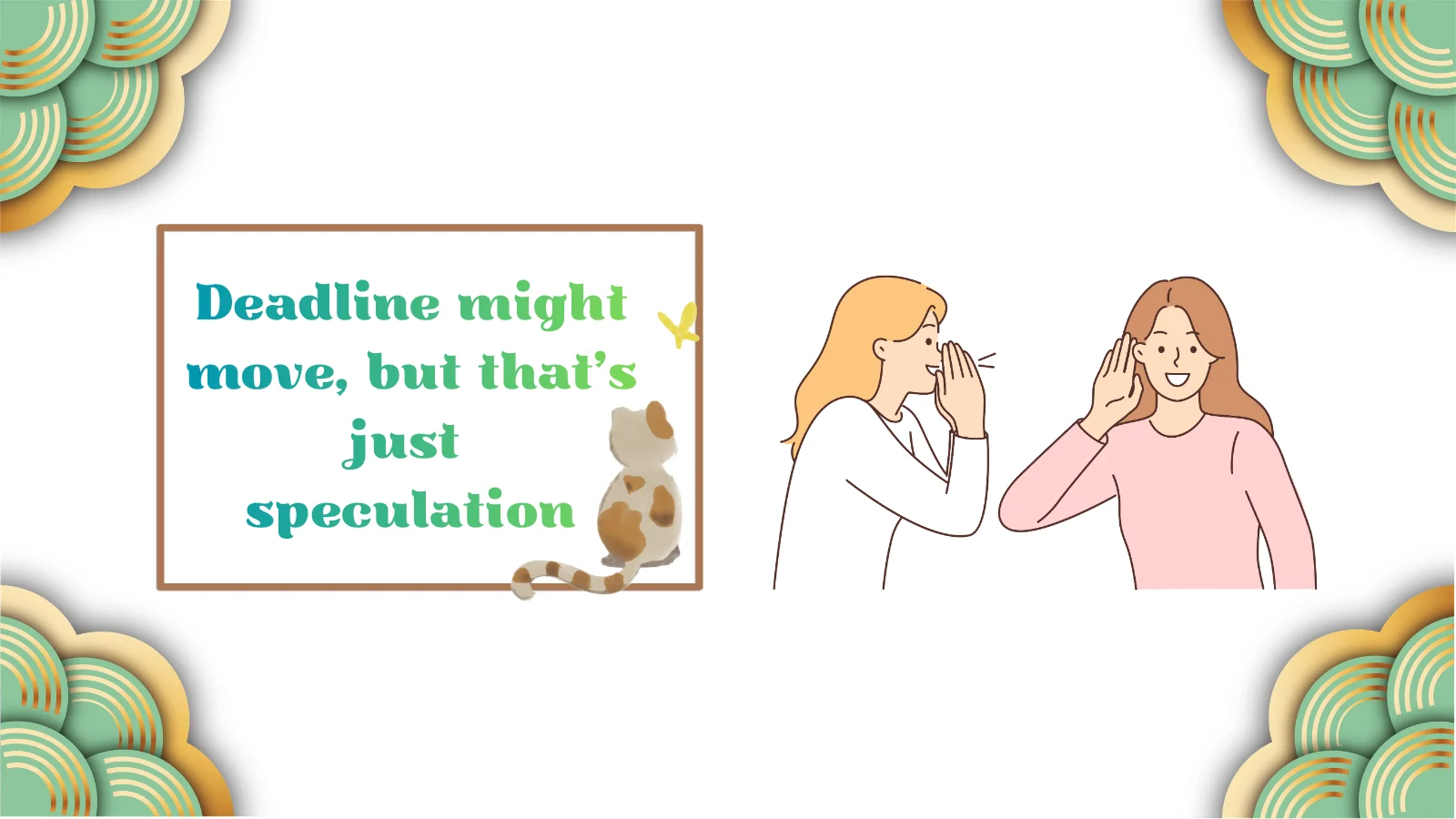
- “Deadline might move, but that’s just speculation.”
Similar Slang Words or Expressions
Here are related terms often used alongside speculation:
- Theory – A more structured guess
- Guess – Casual assumption
- Rumor – Unverified information spreading among people
- Assumption – Belief without proof
- Headcanon – Fan-created idea (popular in fandoms)
- Conspiracy – Extreme or dramatic speculation
Each of these overlaps with speculation, but varies in tone and intensity.
Speculation vs Similar Terms (Comparison Section)
Speculation vs Rumor
- Speculation: Personal guess or theory
- Rumor: Information spreading between people
Speculation vs Assumption
- Speculation: Open-ended thinking
- Assumption: Belief treated as truth
Speculation vs Theory
- Speculation: Less structured, more casual
- Theory: More detailed and thought-out
Is It Formal or Informal?
Speculation is versatile—it works in both formal and informal contexts.
- Casual texting: Very common
- Social media: Frequently used
- Professional settings: Acceptable (neutral tone)
- Academic writing: Common and formal
In chat, it leans slightly informal but still neutral, making it safe to use in most conversations.
Frequently Asked Questions (FAQ Section)
Is speculation Gen Z slang?
Not exactly. Speculation is a standard English word, but Gen Z uses it frequently in online conversations. It fits naturally into digital communication, especially when discussing theories, drama, or trending topics.
Is speculation trending on TikTok?
Yes, especially in comment sections and theory-based content. TikTok users often use speculation when discussing influencer drama, story predictions, or viral moments without confirmed facts.
Can speculation refer to a person?
Not directly. Speculation refers to ideas or guesses, not people. However, it can be about a person—for example, speculation about someone’s relationship or behavior.
Is speculation sarcastic in texting?
It can be. While the word itself is neutral, tone depends on context. Adding emojis or phrasing like “yeah… speculation 🙄” can make it sound sarcastic or dismissive.
Is speculation offensive?
No, it’s generally not offensive. However, spreading harmful or false speculation about someone can be problematic, especially in sensitive situations.
Is speculation commonly used in texting?
Yes, but more in thoughtful or discussion-based chats rather than quick messages. It’s common in group chats, debates, and online forums.
Does speculation mean guessing?
Yes, essentially. It means making an educated or casual guess without confirmed evidence, often based on observation or patterns.
Quick Summary
- Speculation means guessing without confirmed facts
- Used in both literal and slang contexts
- Common in texting, social media, and online discussions
- Tone can be neutral, sarcastic, or analytical
- Not pure slang, but widely used in digital communication
One-line definition:
Speculation in chat means forming or sharing guesses or theories without solid proof.
Final Thoughts
The term speculation has smoothly transitioned from formal language into everyday digital conversations.
While it keeps its original meaning, its role in texting and online culture makes it more flexible and expressive.
Whether you’re discussing rumors, predicting outcomes, or analyzing situations, speculation is a go to word for uncertainty.
Understanding how it’s used helps you better navigate modern communication, especially in spaces where opinions move faster than facts.
Leave a Reply